
Laundromat owners can prevent laundromat equipment damage by addressing the customer habits that put unnecessary strain on washers and dryers. Small mistakes such as overloading a drum, using too much detergent, or ignoring a warning sound can lead to poor results, service calls, and avoidable downtime.
Customers rarely intend to misuse equipment. Usually, they are trying to save time, fit one more item into a load, or choose a cycle without reading the instructions. However, repeated misuse can strain a machine’s mechanical and drainage systems, contributing to premature wear and more frequent service needs.
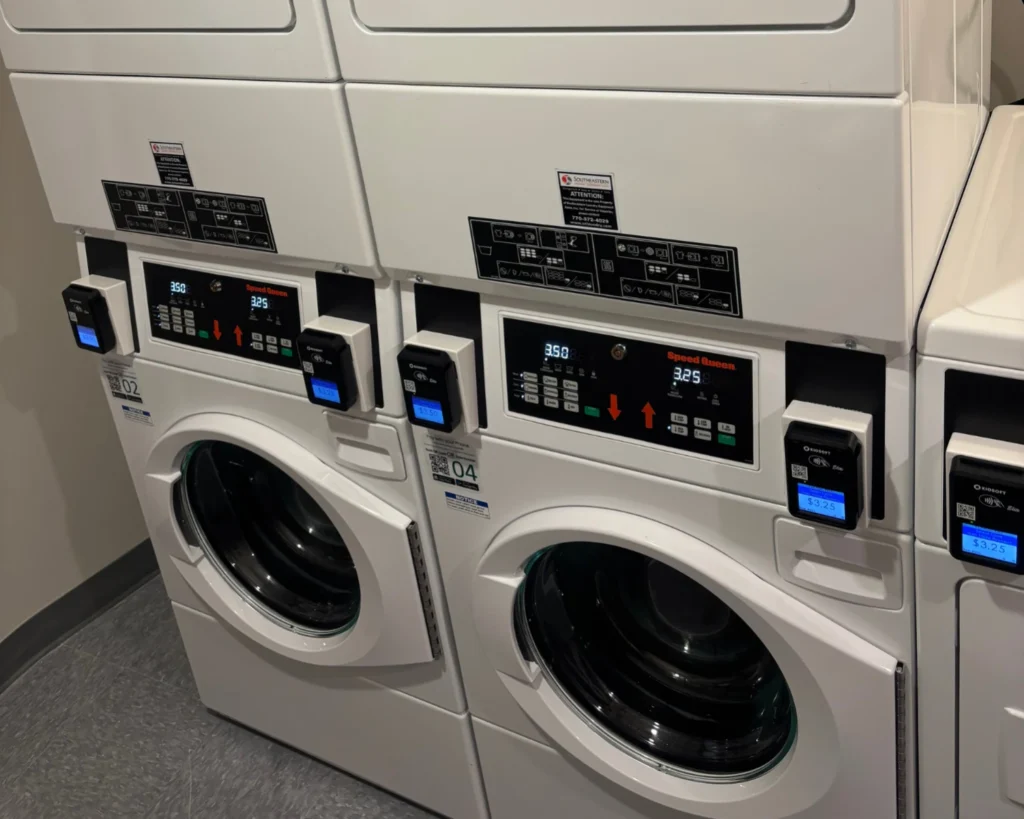
The best way to prevent laundromat equipment damage is to combine customer education with consistent equipment care. Signage matters, but signs alone are not enough. Staff also need to recognize risky behavior, respond politely, and report unusual machine performance before a small issue grows.
In addition, each washer and dryer should be clearly labeled by capacity and intended use. When customers understand which machine fits their load, they are less likely to force bulky items into equipment that is too small. Likewise, simple detergent guidance can reduce oversudsing, residue, and drain problems.
| Customer Mistake | How It Can Affect Equipment | Best Prevention Step |
|---|---|---|
| Overloading machines | Adds strain during tumbling, spinning, extraction, and drying. | Display load limits and provide machines in multiple capacities. |
| Leaving items in pockets | Can damage drums, seals, pumps, and drainage systems. | Post pocket-check reminders near sorting and loading areas. |
| Using too much detergent | Can cause oversudsing, residue buildup, and poor rinsing. | Post machine-specific detergent and dosing guidance. |
| Washing unsuitable items | May cause imbalance, excess weight, contamination, or drainage problems. | Base item restrictions on machine capacity and manufacturer guidance. |
| Ignoring noises or error codes | May allow a minor issue to develop into a larger equipment problem. | Make problem reporting easy and take affected machines out of service promptly. |
| Providing unclear instructions | Can lead to repeated misuse and customer confusion. | Use short, visual, and machine-specific instructions. |
| Limited staff intervention | Allows damaging customer habits to continue during busy periods. | Train employees to guide customers and document equipment issues. |
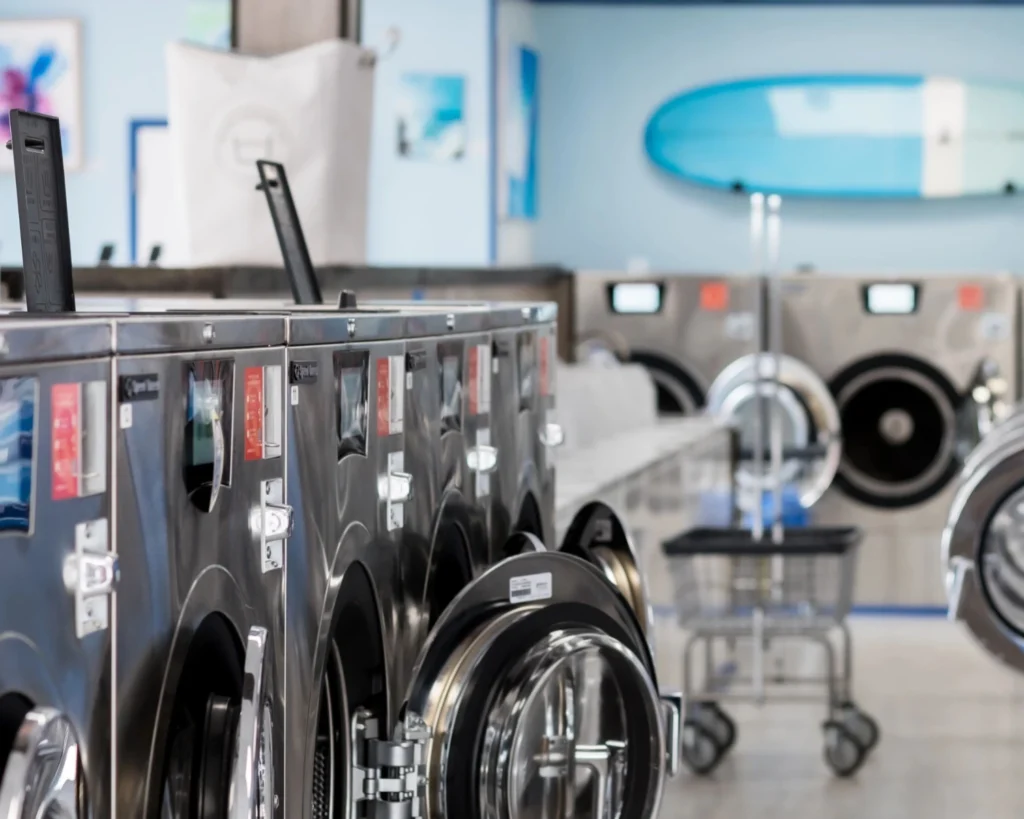
Repeated overloading can shorten the useful life of laundry equipment and contribute to performance problems. A customer may see open space near the top of the drum and assume there is room for several more items. Yet the load still needs space to lift, tumble, rinse, extract, and dry correctly.
When a washer is packed too tightly, wet goods become extremely heavy. As a result, the machine may struggle to balance the load during extraction. Repeated imbalance can place unnecessary stress on a machine’s drive, support, and mounting systems, although the affected components vary by model and installation. The laundry may also come out wetter than expected, which transfers a heavier load into the dryer.
Dryers also need open space for air to move through the goods. An overloaded dryer may also run longer while producing uneven results. Longer or repeated drying cycles increase equipment runtime without solving the underlying airflow problem.
Use simple capacity labels that customers can understand at a glance. For example, display each machine’s rated capacity alongside a simple visual showing the appropriate load level. Also, place larger-capacity machines where customers can find them easily.
Staff should avoid scolding customers. Instead, explain that a larger machine can improve results and may help customers avoid paying for another cycle. Owners reviewing capacity can explore Southeastern Laundry Equipment’s laundromat equipment solutions.
Keys, screws, nails, pens, lighters, hair clips, and loose coins can strike the drum, lodge near a seal, enter a drain path, or damage clothing. In addition, pens and cosmetics can leak, creating a cleanup problem for the laundromat and the next customer.
Small objects are especially troublesome because the washer may continue operating after an item enters an internal area. The first symptom may be a scraping sound, slow drainage, a leak, or an error code.
Place a short reminder where customers naturally pause: above sorting tables, on washer doors, and near payment stations. A message such as “Check pockets for keys, pens, coins, and sharp objects before loading” is specific enough to be useful.
Additionally, provide a lost-and-found container. During walk-throughs, employees should inspect empty drums and visible door seals.
Many customers believe more detergent produces cleaner laundry. However, commercial washers are designed to work with a measured amount of product. Too much detergent can create excess foam, interfere with rinsing, leave residue on clothing, and contribute to buildup inside the machine.
Oversudsing may cause additional rinses, so one dosing mistake can lead to extra cycles, longer machine occupancy, and added wear. Many high-efficiency washers require low-sudsing HE detergent, but customers should follow the instructions posted for the specific machine and detergent product.
To prevent laundromat equipment damage related to detergent, post dosing guidance that accounts for machine capacity, detergent concentration, soil level, and manufacturer instructions. If detergent is sold on site, clearly state how much product customers should use for each compatible machine size. Likewise, explain that heavily soiled laundry may need the correct cycle or pretreatment, not an oversized dose of soap.
Owners should watch for recurring foam, odors, residue, or drainage problems. These signs may reflect customer habits, but they can also indicate a maintenance issue that requires a trained technician.
Not every washable item is suitable for every commercial washer. Items such as oversized rugs, water-resistant pads, heavily soiled pet bedding, greasy shop materials, rubber-backed mats, and bulky comforters may be unsuitable for a particular machine because of their size, weight, construction, or contamination level.
Some items absorb far more water than customers expect, while others hold water unevenly and can create a severe imbalance during extraction. Contaminated items may also leave oils, grit, or pet hair in the drum and drain system, affecting the next load or contributing to clogs. Set clear rules for what the store can safely process.
Base restrictions on manufacturer guidance, machine capacity, cycle design, local requirements, and the laundromat’s cleaning procedures. Then post the most important rules at the entrance and loading area.
When possible, offer a safe alternative inside the store. For example, direct customers with large comforters to an appropriately sized washer. If an item is unsuitable for every machine, staff should explain why and decline the load politely.
The goal is to keep equipment on the premises operating safely and reliably for everyone, not to discourage customers from using the laundromat.
A washer that begins banging, grinding, leaking, or stopping mid-cycle needs attention. Likewise, repeated dryer error codes, unusual heat, long dry times, or a burning smell should never be treated as normal. Even so, some customers may restart the machine or add more time instead of reporting the problem.
That delay matters. A loose part, blocked drain, airflow restriction, or bearing issue may be easier to correct early. Continued use, however, may cause more damage and a longer interruption.
Make reporting easy by placing a machine number and clear problem-reporting instructions on every unit. Staff should immediately mark the unit out of order, record what happened, and avoid repeatedly testing it without proper diagnostic steps.
The U.S. Fire Administration’s general dryer-safety guidance advises cleaning the lint filter before each use. Although the resource is written for household dryer safety, laundromat operators can use it as a basic reminder to include lint-screen checks and airflow concerns in daily equipment procedures.
When a machine needs professional attention, Southeastern Laundry Equipment provides commercial laundry equipment repair services for high-use operations. If a machine continues to display errors or operate unusually, take it out of service and arrange an evaluation before returning it to use.
Is a machine showing the same problem again?
Request service from Southeastern Laundry Equipment to have recurring error codes, unusual noises, leaks, or performance problems evaluated.
Request Equipment ServiceGood signs reduce confusion at the exact moment a customer makes a decision. Poor signs, on the other hand, are easy to ignore. Long paragraphs, tiny print, technical terms, and too many warnings can overwhelm customers.
Instead, use short instructions, clear headings, and one action per line. Multilingual signs may also help, depending on the community.
Focus signage on these actions:
After installing new signs, watch how customers respond. If the same mistake continues, the message may be in the wrong location or may not be clear enough. Treat signage as an operating tool that can be tested and improved over time.

Even strong signage cannot cover every situation. Staff members provide the second layer of protection because they can spot problems in real time. However, employees need specific guidance on what to look for and how to respond.
Train attendants to notice overloaded drums, unsuitable items, excessive detergent, recurring error codes, water on the floor, unusual vibration, and customers who repeatedly restart a problem machine. Give employees respectful language for redirecting those behaviors, too. A helpful explanation will usually work better than a blunt reminder about store rules.
Employees should also know where their responsibility ends. They can check accessible areas, document symptoms, and place a machine out of service. However, they should not remove panels, bypass safety devices, or attempt internal repairs unless qualified. OSHA’s general lockout/tagout guidance explains that employers need energy-control procedures and worker training before employees service or maintain machinery.
A short incident log makes staff observations more useful. Record the machine number, time, customer report, visible symptoms, error code, and action taken. Then, when service is requested, the technician receives better information and can begin with a clearer picture of the problem.
For additional support, Southeastern Laundry Equipment offers service assistance and replacement parts for the brands it sells and services.
Customer education and laundromat equipment maintenance should work together. For example, if staff repeatedly find small metal objects in one washer bank, add a pocket-check reminder directly above those machines.
If oversudsing occurs most often in the largest washers, place clearer detergent measurements there. In other words, use real operating patterns to guide prevention.
A practical routine includes visual checks, documented cleaning, lint and airflow review, and prompt follow-up on leaks, noises, odors, or repeated errors. Professional inspections can also identify wear and adjustment needs that routine walk-throughs miss.
Keep a simple maintenance record for each machine. Over time, the record can reveal patterns such as repeated drain problems, recurring imbalance errors, or longer drying times. Those records help owners respond based on documented performance rather than guesswork.
Southeastern Laundry Equipment supports laundromat owners who want to keep the washers and dryers on their premises productive. Its service-focused approach includes equipment repair, maintenance options, parts support, and practical guidance.
That support can help owners troubleshoot equipment issues, arrange repairs, plan maintenance, and locate parts for the equipment operating in their stores. In turn, owners can make more informed service decisions and respond to problems sooner.
The seven mistakes in this guide have one thing in common: when they go unnoticed, they can contribute to greater wear, longer downtime, or more complicated repairs. Overloading, loose objects, excess detergent, unsuitable items, ignored warnings, weak signage, and limited staff training can all create avoidable strain.
Each risk can be reduced through simple, repeatable procedures. Start by reviewing the machines used most often and the problems customers report. Next, improve one instruction at a time, train staff to intervene consistently, and document what they see. Finally, connect those daily efforts to a reliable maintenance and repair process.
Preventing damage does not require hovering over every customer. Instead, make correct use easy, identify trouble early, and respond before downtime spreads. Clear communication and dependable technical support protect the investment and improve machine availability.
Southeastern Laundry Equipment can help evaluate service needs, schedule equipment support, and discuss practical options for keeping commercial washers and dryers operating reliably. Talk with the Southeastern Laundry Equipment team about repair, maintenance, parts, or equipment support for your laundromat.
Keep your laundromat equipment operating reliably
Talk with Southeastern Laundry Equipment about repair, scheduled maintenance, replacement parts, or equipment support for your laundromat.
Contact the Southeastern TeamStart by making correct machine use easy. Post clear load limits, detergent instructions, pocket-check reminders, and guidance for bulky or restricted items. Staff should also watch for overloading, unusual machine behavior, and repeated customer confusion. When employees address misuse early and report equipment problems promptly, owners can reduce unnecessary wear and avoid preventable downtime.
Yes. An overloaded washer may have difficulty balancing, tumbling, rinsing, or extracting water from the load. That added strain can affect performance and place stress on the machine’s mechanical systems. Overloaded dryers may also need longer cycles because clothing cannot tumble freely or receive enough airflow. Clear capacity labels can help customers choose the right machine.
Too much detergent can cause oversudsing, poor rinsing, residue buildup, and longer wash cycles. In some cases, customers may add even more detergent because they assume the load is not getting clean. Post machine-specific dosing guidance and remind customers to follow the detergent manufacturer’s directions rather than estimating the amount.
The answer depends on the washer’s capacity, design, and manufacturer instructions. Oversized rugs, rubber-backed mats, heavily soiled pet bedding, water-resistant items, and materials contaminated with oils or chemicals may be unsuitable for certain machines. Laundromat owners should create item restrictions based on the equipment in their store instead of applying one rule to every washer.
Take a machine out of service when it begins leaking, making unusual noises, vibrating excessively, producing repeated error codes, overheating, or stopping unexpectedly. Customers and attendants should not keep restarting a machine that is behaving abnormally. Record the machine number and symptoms, then arrange an inspection before returning it to use.
Clear signs can reduce common mistakes when they are short, specific, and placed where customers make decisions. For example, detergent guidance belongs near the dispenser, while pocket reminders work well near sorting tables and washer doors. Visual examples and multilingual instructions may also help customers understand machine capacity and proper use.
Maintenance frequency depends on the equipment model, usage level, operating environment, and manufacturer recommendations. Daily visual checks can identify lint buildup, leaks, debris, unusual noises, and damaged doors or seals. Owners should also keep service records and schedule professional maintenance according to the equipment manufacturer’s guidance and the store’s operating demands.
Southeastern Laundry Equipment supports laundromat owners with commercial equipment repairs, scheduled maintenance, service agreements, technical support, and replacement parts. Owners can contact Southeastern Laundry when a machine develops recurring errors, unusual performance, or service needs that require professional attention.