
Choosing multi-housing laundry equipment is not just about replacing old washers and dryers. For property managers, apartment owners, and HOA decision-makers, the right laundry setup can improve resident satisfaction, reduce complaints, and support long-term property revenue.
At the same time, the wrong equipment can create service issues, wasted space, higher utility costs, and frustrated residents. That is why a practical checklist matters. Before you compare machines, brands, or payment systems, it helps to understand what your property actually needs.
A strong laundry room should fit your building, your residents, your budget, and your long-term operating goals. Whether you manage a small apartment community, a large multi-family property, student housing, senior living, or an HOA-managed residential community, this guide will help you evaluate the most important details before purchasing commercial laundry equipment.
Southeastern Laundry Equipment works with property teams that want dependable, on-premise laundry solutions designed around real resident use. Rather than thinking of laundry as a basic utility, property managers can treat it as a daily amenity that affects convenience, retention, and the overall living experience.
Planning a laundry upgrade for your property?
Southeastern Laundry Equipment can help you review your property size, resident needs, equipment options, and installation requirements before you make a decision.
Request a Multi-Family Laundry Consultation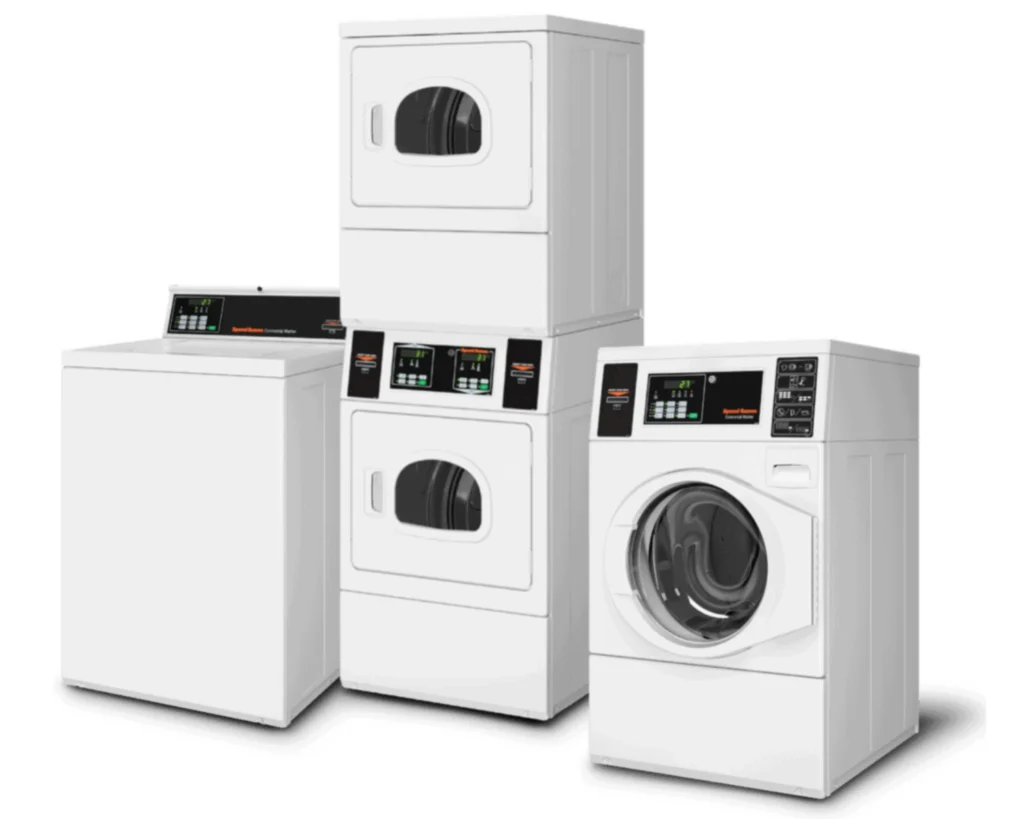
Before selecting multi-housing laundry equipment, start with your property profile. A laundry room for a 40-unit apartment building will not have the same requirements as a 300-unit community with multiple laundry areas. Therefore, your first step should be to match machine capacity, room layout, payment technology, and service planning to actual resident demand.
Begin by asking a few practical questions. How many units does the property have? How many residents are likely to use the shared laundry room each week? Are there in-unit laundry hookups in some apartments, or is the common laundry area the main option for most residents? Also, does the property serve families, students, working professionals, seniors, or a mix of residents?
These details matter because laundry habits vary. For example, a student housing property may need durable machines that can handle frequent weekend use. A senior community may need easy-to-reach controls, clear instructions, and reliable service. Meanwhile, a large apartment community may need several smaller laundry rooms spread across the property instead of one central location.
In addition, property managers should look at current pain points. If residents complain about machines being unavailable, cycles taking too long, payment issues, or frequent breakdowns, those complaints can guide your buying priorities.
A checklist helps property managers compare laundry equipment in a more practical way. On paper, many proposals can look similar. You may see a washer count, a dryer count, a payment option, and a price. However, those details do not always show how the laundry room will perform once residents start using it every week.
That is why it helps to look beyond the equipment quote and think about the full operating impact. The right apartment laundry equipment should fit the property’s layout, support resident habits, control long-term costs, and make service easier when issues come up. The table below can help you review each part of the decision before you commit to a specific setup.
| Checklist Item | What to Review | Why It Matters |
|---|---|---|
| Property size | Number of units, residents, and laundry rooms | Helps determine machine count and capacity |
| Resident needs | Payment preferences, accessibility, and usage patterns | Improves convenience and satisfaction |
| Equipment type | Front-load, top-load, stackable units, and dryers | Supports space, efficiency, and demand |
| Utility use | Water, gas, and electric requirements | Affects long-term operating costs |
| Payment systems | Coin, card, value transfer, and app-based options | Makes laundry easier for residents |
| Service support | Preventive maintenance and repair response | Reduces downtime and complaints |
| Installation needs | Space, venting, drainage, electrical, and plumbing | Prevents costly setup problems |
| Budget structure | Purchase, lease, service agreements, and lifecycle cost | Supports smarter financial planning |
This table can also help during vendor conversations. When a supplier understands your property size, resident expectations, and utility limitations, they can recommend a better laundry solution. As a result, your final choice is more likely to serve both residents and ownership.
Multi-family laundry rooms need machines that are built for regular, shared use. That may sound obvious, but it is one of the most important differences between a laundry room that works well for years and one that becomes a steady source of resident complaints. A washer or dryer in a common laundry room may run many cycles a day, especially in larger apartment communities, student housing, senior living properties, or buildings where residents do not have in-unit laundry connections.
Residential washers and dryers are not designed for that level of demand. In contrast, commercial laundry equipment is made for higher cycle counts, heavier loads, and more consistent performance. Property managers can also use U.S. Department of Energy information on commercial clothes washers as a helpful reference when comparing equipment for shared laundry spaces.
Durability should be one of the first things you review because the lowest upfront price does not always lead to the lowest long-term cost. A machine that breaks down often can frustrate residents, reduce laundry room income, and create extra work for the property team. Over time, repeated service calls and unavailable machines can cost more than choosing better equipment from the beginning.
The appearance of the laundry room matters, too. Clean, modern, matching equipment tells residents the property is being maintained with care. That may seem like a small detail, but residents notice shared spaces. When the laundry room looks outdated, unreliable, or poorly planned, it can affect how they view the rest of the community.
Southeastern Laundry Equipment offers multi-family laundry equipment options from recognized commercial brands, along with support for planning, installation, and service. For property teams that want to manage laundry equipment on-premises, that kind of support can make the upgrade process more practical and less stressful.
Need equipment built for shared laundry use?
Explore commercial laundry equipment options for apartment communities, HOAs, student housing, senior living, and other multi-family properties.
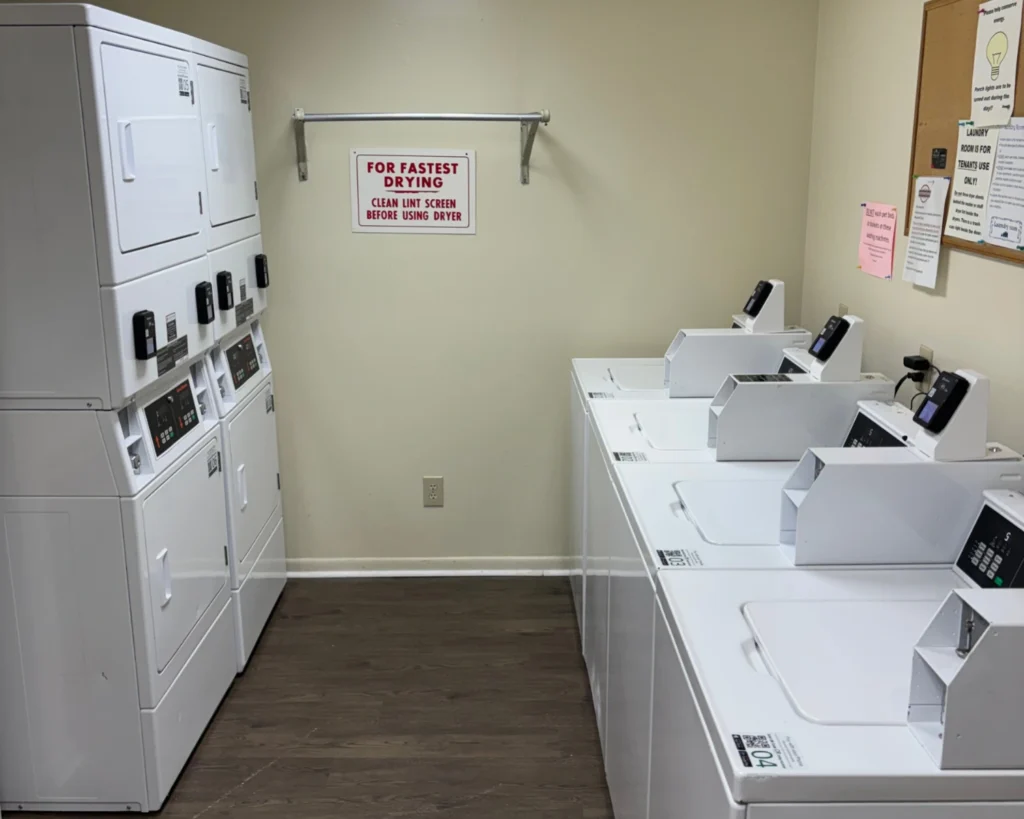
View Multi-Housing Laundry SolutionsSpace planning is one of the most overlooked parts of choosing apartment laundry equipment. Even high-quality machines can create frustration if the laundry room is crowded, poorly lit, or difficult to navigate. Because of that, layout should be part of the buying decision from the beginning.
First, measure the room carefully. Include door swings, utility access, folding areas, seating, trash bins, vending areas, and traffic flow. Then, consider whether stackable washers and dryers could help maximize space. Stackable units can be especially useful in smaller laundry rooms, garden-style apartment buildings, or properties with limited square footage.
However, maximizing machine count should not come at the expense of comfort. Residents need room to move baskets, open doors, transfer laundry, and fold clothes. In addition, service technicians need access to machines for maintenance and repairs. If the equipment is too tightly arranged, simple service calls can take longer than necessary.
Good laundry room planning also includes ventilation, drainage, flooring, lighting, and safety. For instance, dryers need proper venting to operate efficiently. Washers need suitable drainage and water supply. Meanwhile, bright lighting and clean surfaces can make the room feel safer and more welcoming.
A laundry equipment partner can help review these details before installation. That is especially helpful when replacing older machines, converting a room to new payment technology, or redesigning a shared laundry area.
Energy-efficient multi-housing laundry equipment can reduce utility use and support better long-term cost control. According to ENERGY STAR, certified commercial clothes washers are, on average, 9% more energy efficient and use about 45% less water than standard models. For many apartment communities, laundry rooms use water, electricity, and gas every day. Therefore, even small efficiency improvements can matter over time.
When reviewing equipment, look at washer water usage, extraction speed, cycle options, dryer efficiency, and load capacity. Washers with higher extraction speeds can remove more water before clothes go into the dryer. As a result, drying time may decrease, which can improve resident convenience and reduce dryer demand.
Energy-efficient machines may also support sustainability goals. Many residents care about practical environmental improvements, especially when they also improve daily convenience. A modern laundry room with efficient machines can become a visible example of responsible property management.
For additional educational context, property managers can review ENERGY STAR commercial clothes washer information{=”_blank” rel=”noopener”} and the U.S. Department of Energy definition for commercial clothes washers{=”_blank” rel=”noopener”}. These resources can help teams understand why shared-use laundry settings require equipment designed for commercial applications.
Payment systems have changed quickly. While coin-operated laundry still works for some properties, many residents now expect more flexible payment options. Depending on your resident base, that may include credit cards, laundry cards, value transfer systems, or app-based payments.
Convenient payment technology can reduce friction. Residents do not want to search for quarters, deal with jammed coin slides, or make extra trips because they forgot payment. In addition, some app-based systems can show machine availability or cycle status, which helps residents plan their laundry around work, school, or family schedules.
That said, the best payment system depends on the property. A smaller community with longtime residents may prefer a simple setup. A larger apartment community with younger renters may benefit from mobile-first options. Meanwhile, properties with mixed resident demographics may need a system that supports more than one payment method.
Southeastern Laundry Equipment’s multi-family direct sales information notes convenience payment options such as coin, credit card, value transfer, and app-based systems. For property managers, that range can be useful because it allows the payment setup to match the community instead of forcing every property into one model.
Want easier laundry payments for residents?
Review coin, card, value transfer, and app-based payment options that can make your laundry room more convenient for daily resident use.
Review Laundry Payment SystemsBudget planning should include more than the purchase price of washers and dryers. The number on the proposal matters, of course, but it does not tell the whole story. Property managers also need to think about installation, utility use, maintenance, parts, repairs, downtime, and the expected replacement timeline. Together, those factors make up the real cost of owning and operating multi-housing laundry equipment.
Purchasing equipment may be a good fit for properties that want direct control over their laundry assets. This approach can make sense for owners who are investing in long-term property improvements and want to manage the laundry room as part of the community’s amenity package. However, purchasing also means the property should have a plan for service, maintenance, and eventual replacement.
Leasing may be a better fit for communities that want to reduce upfront costs or simplify budgeting. In some cases, a lease or service agreement can help make laundry room expenses more predictable. That can be useful for property teams managing multiple communities, especially when they need consistent equipment standards and dependable service support across several locations.
Before choosing a budget structure, ask the vendor to explain exactly what is included. Installation, parts, labor, payment system setup, training, and response times can vary from one proposal to another. A lower monthly number may not be the better option if key services are missing, so it is worth comparing each proposal line by line.
Clear answers at this stage help prevent surprises later. They also make it easier to choose a laundry solution that fits both the property’s financial goals and the residents’ everyday needs.
Proper installation is essential. Even the best multi-housing laundry equipment will not perform well if the room is not prepared correctly or the machines are not installed with the right utility requirements in mind. Before installation begins, your vendor should review machine placement, water supply, drainage, electrical connections, dryer venting, payment systems, and start-up testing.
This is especially important in older apartment communities, where laundry rooms may have been designed around equipment that is no longer the best fit. A property may need plumbing adjustments, venting improvements, electrical updates, or a revised room layout before new machines can operate properly. It is better to identify those needs early than to discover them during installation.
A professional installation process also helps reduce disruption for residents. If your laundry room is already in use, residents need to know when machines will be offline, when the new equipment will be available, and whether payment instructions are changing. Clear communication can prevent confusion and help residents feel more comfortable with the upgrade.
The installation stage is also a good time to think about the long-term service experience. Technicians should be able to access machines without moving other equipment or blocking the room. Property staff should know who to contact for service, how to report issues, and what basic information residents may need.
Southeastern Laundry Equipment provides installation services and system setup support for commercial laundry operations. For multi-family housing properties, that support can help make sure equipment is placed, connected, and tested correctly from the start.
A laundry room is only valuable when it works. Therefore, maintenance should be part of the buying decision, not an afterthought. Residents quickly lose confidence in a laundry room when machines stay out of service, display repeated errors, or leave clothes too wet.
Preventive maintenance can help reduce avoidable downtime, and dryer maintenance is especially important because the NFPA identifies dust, fiber, or lint as leading items first ignited in dryer fires. This may include checking hoses, belts, drains, lint buildup, dryer vents, payment systems, and machine calibration. In addition, a clear service request process helps property teams respond quickly when a resident reports an issue.
When choosing a vendor, ask about technician coverage, parts availability, supported brands, and response expectations. Also, ask whether the company can service both newer and older equipment. This matters for properties that may upgrade in phases or maintain a mix of machines for a period of time.
Southeastern Laundry Equipment highlights service and parts support across major commercial laundry equipment brands. For property managers, local and regional service depth can be an important part of keeping laundry rooms dependable.
Button: Request Laundry Equipment Service Support
Brand selection matters, but it should be tied to your property’s needs. A well-known commercial laundry brand is helpful only if the model, size, controls, and service plan fit your community.
For washers, review capacity, cycle speed, water extraction, control options, and accessibility. For dryers, review capacity, heat source, venting needs, cycle efficiency, and ease of lint maintenance. Also, consider whether residents typically wash small daily loads or larger family loads. That will influence the best equipment mix.
In many multi-family settings, a combination of washer sizes may improve the resident experience. Standard machines can handle typical loads, while larger-capacity machines may help with bedding, towels, or family laundry. However, the right mix depends on space and demand.
Property managers should also think about consistency. If controls vary too much from machine to machine, residents may need extra instructions. A simpler, consistent experience can reduce confusion and make the laundry room easier to use.
The strongest laundry rooms are planned as complete systems. Equipment is the foundation, but the full experience includes layout, payment, lighting, signage, ventilation, maintenance, and resident communication.
For example, residents should know how to pay, how to report issues, and what to expect from the machines. Clear signage can reduce misuse. Clean folding areas can improve convenience. Reliable service can protect revenue. In addition, modern payment reporting can help property teams understand usage patterns and make better decisions over time.
This is where a laundry equipment partner can add value. Southeastern Laundry Equipment works with multi-family properties that need equipment, installation, service, payment options, and long-term support. The benefit is not just access to washers and dryers. It is guidance that helps property managers choose a setup that fits their building and residents.
That approach is especially helpful for communities replacing outdated laundry equipment. Instead of swapping machines one for one, the property can use the upgrade as a chance to improve the room, reduce complaints, and support a better resident experience.
Before you approve a proposal, use the final review as a practical conversation starter with your ownership team, maintenance staff, and laundry equipment provider. The goal is not to check boxes quickly. It is to make sure the laundry room you choose will work for the people who use it and the team responsible for managing it.
Start by confirming the number of residents, expected laundry demand, room size, utility connections, ventilation, and accessibility. Then, review whether the proposed machines are truly built for shared residential use. From there, compare payment systems based on resident preferences, ask about installation and service response, and look closely at parts availability and maintenance support.
Finally, evaluate the total cost of ownership instead of focusing only on the upfront price. A strong laundry equipment plan should support your property’s long-term goals, reduce avoidable service issues, and give residents a laundry room they can count on. That kind of planning makes the final decision easier and helps protect the investment after the equipment is installed.
Ready to compare options for your property?
Share a few details about your property, and Southeastern Laundry Equipment can help you review equipment, layout, payment systems, and service support.
Contact a Laundry Equipment SpecialistBuying multi-housing laundry equipment is a practical decision, but it is also a resident experience decision. The machines you choose will be used week after week, often by many households. Because of that, reliability, convenience, and service support should carry just as much weight as price.
For property managers, apartment owners, and HOA decision-makers, the goal is not simply to buy washers and dryers. The goal is to build a laundry solution that fits the property, supports residents, and works financially over time.
Southeastern Laundry Equipment can help multi-family housing communities evaluate equipment options, plan laundry room layouts, review payment technology, and understand service support. Whether you are replacing outdated machines, planning a new laundry room, or comparing equipment proposals, the right guidance can make the process clearer.
A better laundry room starts with better planning. Start with your property needs, ask the right questions, and choose equipment that can support your residents for years to come.
Property managers should look for commercial-grade machines, reliable service support, flexible payment options, energy efficiency, and a layout that fits the property’s laundry demand. The best multi-housing laundry equipment should serve residents well while also making sense for the property’s long-term operating costs.
The right number depends on the unit count, resident population, laundry habits, available space, and whether some apartments have in-unit laundry connections. A smaller property may only need one shared laundry room, while a larger apartment community may need multiple laundry areas with a mix of washer and dryer sizes.
Yes, commercial laundry equipment is usually the better choice for apartment buildings because it is built for shared use and higher cycle volume. Residential machines are not designed for the same level of daily demand, which can lead to more downtime, more repairs, and more resident complaints.
Multi-housing laundry equipment can support several payment options, including coin, laundry card, credit card, value transfer, and app-based systems. Southeastern Laundry can help property managers review payment options based on resident preferences, property size, and how the laundry room is managed.
Energy-efficient laundry equipment can help reduce water and energy use, which may lower long-term operating costs. This is especially important for multi-family properties where shared laundry rooms may be used every day by many residents.
The better option depends on the property’s budget, ownership goals, and maintenance preferences. Buying may be a good fit for owners who want direct control over their equipment, while leasing may help reduce upfront costs and make laundry room expenses more predictable.
Proper installation helps laundry equipment run safely, efficiently, and reliably. Before installation, property managers should review water supply, drainage, electrical connections, dryer venting, machine placement, and payment system setup. Southeastern Laundry can help with installation planning and system setup for multi-family laundry rooms.
Southeastern Laundry can help property managers choose multi-housing laundry equipment, review room layouts, compare payment systems, plan installation, and understand service support. This gives apartment communities, HOAs, student housing, and senior living properties a clearer path to a dependable on-premise laundry solution.