
Knowing how to reduce laundry operating costs starts with understanding how your commercial laundry equipment performs every day. From rising utility bills to frequent repairs and longer drying cycles, seemingly minor inefficiencies can gradually drain your on-premise laundry budget. For hotels, healthcare facilities, senior living communities, and fitness centers, these expenses can become particularly noticeable when washers and dryers run for several hours a day.
However, purchasing new equipment isn’t always the answer. Sometimes, adjusting wash programs, improving maintenance routines, or making better use of existing machines can help lower expenses. The key is understanding where your money goes and identifying changes that will help your laundry team work more efficiently without compromising cleaning quality.
An effective way to reduce laundry operating costs is to evaluate equipment efficiency, utility consumption, maintenance requirements, labor expenses, and daily laundry volume together. Although utility bills are often the first place managers look for savings, the amount of time and labor required to process each load deserves just as much attention.
For instance, a commercial washer with declining moisture extraction performance may leave towels and bedding wetter than usual. As a result, employees may need to extend drying cycles, which increases energy consumption and leaves fewer dryers available for the next load. What appears to be a small equipment issue can eventually affect an entire laundry shift.
Before investing in new machines, review maintenance records, monitor cycle times, and pay attention to equipment that regularly needs extra care. Comparing these findings with your monthly expenses can help you focus on the changes that could make the biggest difference to your laundry budget.
An older commercial washing machine may still complete every cycle without displaying an error code, but that doesn’t necessarily mean it’s operating efficiently. As equipment ages, worn components, outdated controls, and declining mechanical performance can gradually increase expenses. Because these changes often happen over time, laundry managers may not recognize how much additional water, energy, or labor their machines require until they review operating costs more closely.
Older commercial washers may offer fewer options for adjusting water levels, temperatures, and wash programs. For example, a facility that uses the same cycle for lightly soiled towels and heavily soiled linens may consume more water or energy than certain loads actually require. Although the difference may seem small, those additional expenses can quickly add up in a busy laundry room. The EPA’s WaterSense at Work guidelines provide further guidance on evaluating water use and identifying efficiency improvements in commercial laundry facilities.
Dryers deserve the same attention. Restricted airflow, declining heating performance, or worn components can cause machines of any age to take longer to dry a load. In a hotel laundry room, even a few extra minutes per batch of heavy bath towels can disrupt the production schedule when employees have several more loads waiting to be dried.
Equipment performance also affects how employees spend their time. When machines run slowly or produce inconsistent results, staff may find themselves rewashing towels, extending drying cycles, or repeatedly checking whether a load is ready. In a busy fitness center, for example, these extra tasks can leave employees rushing to replenish clean towels between peak workout hours. Reliable commercial laundry equipment helps keep production on schedule, allowing employees to focus on their regular responsibilities instead of correcting recurring washer and dryer problems.
Occasional repairs are a normal part of owning commercial laundry equipment. However, when service calls become more frequent, it’s worth taking a closer look at the machine’s overall condition. A relatively inexpensive replacement part may not seem like a major expense on its own, but repeated repairs can become costly when the same machine regularly interrupts production.
Instead of evaluating each repair separately, review the machine’s service history alongside the cost of replacement parts, technician visits, and additional labor. This gives you a clearer picture of what it actually costs to keep the equipment running and whether continuing to invest in repairs makes financial sense.
You do not need to wait for a complete equipment breakdown to recognize declining performance. In fact, many commercial washers and dryers display warning signs long before a major failure occurs.
The following table highlights common symptoms, their potential financial consequences, and appropriate actions.
| Warning Sign | Potential Operating Expense | Recommended Action |
|---|---|---|
| Longer drying cycles | Increased energy and labor costs | Inspect airflow, heating components, and washer extraction |
| Excessively wet linens after washing | Additional dryer operating time | Evaluate washer extraction performance |
| Frequent water leaks | Higher water bills and potential property damage | Arrange a professional inspection |
| Recurring error codes | Production interruptions and repair expenses | Schedule equipment diagnostics |
| Inconsistent wash results | Additional detergent, water, and labor | Review machine settings and chemical dispensing |
| Excessive vibration or unusual noises | Accelerated component wear | Request a mechanical inspection |
| Rising utility consumption without a corresponding increase in laundry volume | Higher utility costs per pound of laundry | Compare utility consumption, utility rates, equipment performance, and laundry production records |
| Repeated equipment repairs | Unpredictable maintenance expenses | Conduct a repair-versus-replacement assessment |
Because these symptoms can have several causes, professional commercial laundry equipment repair services can help determine whether a machine needs adjustments, replacement parts, or more extensive repairs before the problem becomes more costly.
Preventive maintenance can help protect your on-premise laundry budget by addressing equipment problems before they become more expensive to resolve. Rather than waiting for a washer or dryer to break down during a busy shift, facility managers can schedule routine inspections to check for signs of wear and declining performance. Regular maintenance also helps machines deliver more consistent results, making it easier for employees to keep up with everyday laundry demands.
Daily equipment care doesn’t have to be complicated. Cleaning lint screens according to manufacturer instructions, checking for visible leaks, wiping equipment surfaces, and reporting unusual sounds are simple tasks that employees can incorporate into their regular laundry routine. It’s also worth keeping track of changes in machine performance, such as a dryer that gradually takes longer to finish a load.
When employees document these changes, service technicians have more information to work with during their next visit. While laundry staff can handle basic cleaning and visual checks, more advanced maintenance, including electrical inspections, mechanical adjustments, and internal component evaluations, should be left to qualified professionals.
Unexpected equipment failures can leave facility managers dealing with repair expenses they hadn’t planned for. However, establishing a regular maintenance schedule makes it easier to budget for routine service and identify components that may need attention before they interrupt daily laundry production.
At Southeastern Laundry Equipment, our scheduled maintenance programs include a 77-point inspection of commercial washers and dryers. This detailed assessment gives facility managers a clearer picture of their equipment’s condition, helping them plan maintenance and anticipate potential repairs rather than making decisions only when a machine stops working.
When was the last time your laundry equipment had a thorough inspection?
A scheduled maintenance plan can help you identify equipment issues early, anticipate service expenses, and keep your on-premise laundry running reliably.
Request a Preventive Maintenance PlanWhen a commercial washer or dryer stops working, the repair invoice tells only part of the story. A senior living community, for example, may need employees to work longer shifts to maintain an adequate supply of clean bedding, towels, and residents’ clothing. Meanwhile, the remaining washers and dryers may need to run more frequently to compensate for the unavailable equipment, potentially increasing wear and maintenance expenses.
Beyond the immediate repair expense, equipment downtime can create several additional costs and operational challenges:
Keeping a record of breakdowns, downtime, and any resulting overtime expenses can help you understand how much equipment failures are really costing your business.
Today’s commercial laundry equipment gives facility managers more control over water and energy consumption. However, newer technology alone won’t guarantee savings. To get the most out of an equipment investment, consider how its features fit the types of textiles, load sizes, and laundry volumes your business handles every day.
Different fabrics and soil levels require different washing conditions, yet some laundry rooms rely on the same settings for nearly every load. Lightly soiled spa towels, for example, may not require the same wash program as restaurant linens covered in food stains and grease. Using an unnecessarily intensive cycle can increase water and energy consumption without improving the results for certain loads.
Commercial washers with programmable controls give managers more flexibility to adjust water levels, temperatures, and cycle duration according to their laundering requirements. Once appropriate programs are established, employees can follow consistent procedures instead of making adjustments for every load. However, healthcare facilities and other regulated environments must ensure that their wash programs meet applicable sanitation and infection-control requirements.
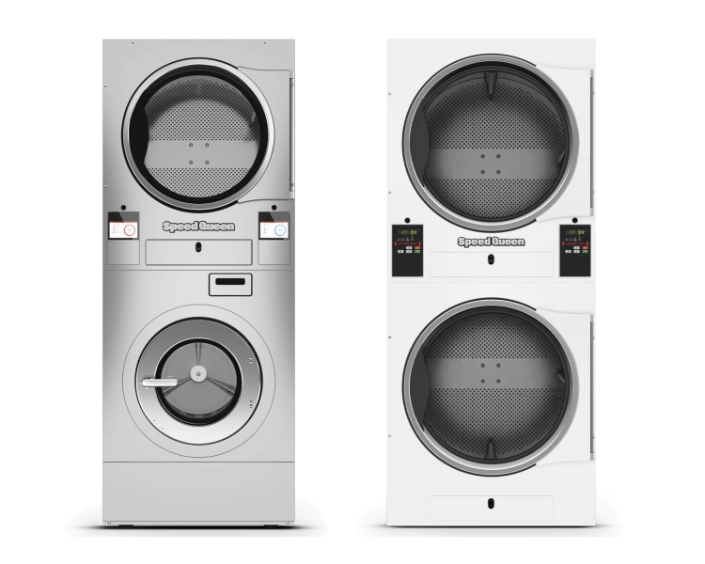
One way to reduce laundry operating costs is to remove more moisture from textiles before they enter the dryer. High-extraction washers accomplish this during the final spin cycle, leaving less water for the dryer to evaporate. As a result, facilities may benefit from shorter drying times, lower energy consumption, and greater equipment availability throughout the day.
The UniMac® UW Series High-Performance Washer-Extractor, for example, offers extraction levels of up to 400 G. As UniMac® explains in its guide to G-Force extraction, removing more moisture during the final spin can reduce the time required for drying. This is particularly useful for facilities that regularly process heavy, absorbent textiles such as bath towels, robes, and cotton linens.
Choosing the right commercial laundry equipment isn’t simply a matter of buying the largest machine your laundry room can accommodate or selecting the one with the lowest price. Equipment capacity should reflect the amount and type of laundry your business processes, the hours available for washing and drying, and how demand changes throughout the day.
A fitness center, for example, may experience higher towel demand during morning and evening workout hours, while a nursing home may have a steadier laundry workload throughout the day. Understanding these patterns helps you choose equipment that can keep up during busy periods without being unnecessarily oversized for everyday use.

Undersized machines may require employees to run additional cycles throughout the day, increasing the time and resources needed to process the same amount of laundry. On the other hand, consistently underloading oversized equipment can result in unnecessary water and energy consumption, depending on the machine’s design and settings. Finding the right balance starts with understanding how much laundry your facility actually processes.
Using a laundry scale, recording daily production, and reviewing peak workloads can help determine whether your existing equipment is the right size. It’s also important to evaluate washer and dryer capacity together. Even if your washers can handle the daily workload, insufficient drying capacity may leave employees waiting to transfer freshly washed linens.
Deciding whether to repair or replace commercial laundry equipment comes down to more than comparing a repair quote with the price of a new machine. Consider the equipment’s remaining useful life, ongoing operating expenses, and ability to keep up with your laundry room’s workload.
Commercial washing machine repair can be a worthwhile investment when the equipment is generally reliable, replacement parts are available, and operating expenses remain reasonable. A professional inspection may also reveal that a performance issue comes from a single worn component rather than more extensive wear throughout the machine. In that case, a targeted repair could restore normal operation and allow your business to continue using its existing equipment without the expense of an immediate replacement.
Replacing commercial laundry equipment may make more financial sense when repair expenses continue to rise, machines frequently go out of service, or the existing equipment can no longer keep up with daily laundry demand. Depending on the model, newer machines may also offer improved moisture extraction, more flexible wash programs, and better tools for monitoring performance.
Before committing to an upgrade, however, compare the purchase and installation costs with your current repair expenses, utility consumption, expected equipment lifespan, and production requirements. A machine with a higher upfront price may offer better long-term value if it requires fewer repairs or helps employees process laundry more efficiently. Any projected savings should reflect your facility’s actual workload, local utility rates, and equipment specifications.
Another repair or a worthwhile upgrade?
Our team can help you evaluate your existing commercial laundry equipment, compare your options, and determine what makes sense for your facility’s workload and budget.
Discuss Your Equipment OptionsOne of the most practical ways to measure whether your efforts to reduce laundry operating costs are working is to calculate your cost per pound of laundry. This figure helps you understand how much your business spends processing textiles and whether changes to equipment, maintenance, or daily procedures are delivering financial improvements.
To calculate your operating cost per pound, divide your total laundry operating expenses by the total weight of dry laundry processed during the same period.
Operating cost per pound = Total laundry operating expenses ÷ Total pounds of dry laundry processed
For example, consider the following hypothetical monthly expenses for an on-premise laundry facility.
| Monthly Expense | Estimated Cost |
|---|---|
| Water and sewer | $650 |
| Electricity and gas | $1,150 |
| Laundry chemicals | $450 |
| Employee labor | $3,200 |
| Maintenance and repairs | $550 |
| Total monthly operating expenses | $6,000 |
| Monthly laundry production (dry weight) | 20,000 lbs |
| Operating cost per pound | $0.30 |
These figures are illustrative and do not represent industry averages or guaranteed savings. A complete equipment ownership cost analysis should also account for acquisition costs, financing interest, and other applicable expenses without counting the same costs twice.
Suppose the same facility reduces its monthly operating expenses by $500 while continuing to process 20,000 pounds of laundry. Its operating cost per pound would drop from $0.30 to $0.275. Although a difference of 2.5 cents per pound may not sound particularly impressive, it would translate into $6,000 in annual operating savings if maintained throughout the year.
Comparing this figure from month to month can help you determine whether maintenance work, equipment upgrades, or changes to laundry procedures are making a measurable difference. Be sure to account for changes in utility rates and laundry volume so you can distinguish genuine efficiency improvements from seasonal fluctuations.
Reducing expenses in your on-premise laundry room doesn’t have to begin with a major equipment purchase. Start by reviewing your utility bills, service history, cycle times, and daily laundry volume. These records can help you determine whether your business would benefit most from maintenance, changes to existing machine settings, or an equipment upgrade.
At Southeastern Laundry Equipment, we help businesses work through these decisions with equipment recommendations, professional repairs, replacement parts, and preventive maintenance solutions. Whether you’re trying to get more years out of your existing washers and dryers or planning for an increase in laundry demand, our team can help you evaluate options that make sense for your facility and budget.
After all, the goal is to reduce laundry operating costs while keeping enough clean linens available, maintaining cleaning standards, and giving your staff dependable equipment to work with every day.
Start by reviewing water and energy consumption, equipment performance, laundry volume, and maintenance expenses. Optimizing wash programs, using appropriate load sizes, and scheduling preventive maintenance can help lower daily expenses. In addition, improving moisture extraction during washing may reduce drying times without compromising cleaning quality.
Labor, water, electricity, gas, laundry chemicals, and equipment maintenance are among the main operating expenses. However, hidden costs such as rewashing linens, extended drying cycles, employee overtime, and unexpected equipment downtime can also affect your laundry budget. Tracking the cost per pound of laundry helps identify where improvements are needed.
Yes, energy-efficient commercial washers can help reduce laundry operating costs by optimizing water consumption, offering programmable wash cycles, and improving moisture extraction. However, actual savings depend on equipment specifications, utility rates, laundry volume, and operating practices. Choosing machines that match your facility’s workload is essential to achieving meaningful savings.
Preventive maintenance helps identify worn components, airflow restrictions, leaks, and other equipment issues before they lead to more expensive repairs. Southeastern Laundry Equipment offers scheduled maintenance programs that include a 77-point equipment inspection, helping businesses better manage maintenance expenses and minimize avoidable downtime.
Repairing commercial laundry equipment may be more economical when machines remain reliable and replacement parts are readily available. However, replacement may offer better long-term value when frequent breakdowns, declining efficiency, and rising operating expenses become recurring concerns. Comparing repair costs, equipment lifespan, and projected operating expenses can help you make an informed decision.
Yes. Southeastern Laundry Equipment helps businesses improve their on-premise laundry operations through equipment assessments, preventive maintenance, professional repairs, replacement parts, and commercial laundry equipment recommendations. By evaluating your facility’s workload, existing machines, and operational challenges, our team can help identify practical opportunities to improve efficiency and manage expenses.
Make every laundry dollar work a little harder.
Whether you’re looking to reduce laundry operating costs, improve equipment performance, or plan your next investment, Southeastern Laundry Equipment can help you find practical solutions for your on-premise laundry.
Talk to a Commercial Laundry Specialist