
Running an on-premise laundry gives your facility direct control over linen availability, wash quality, turnaround times, and day-to-day operations. However, on-premise laundry costs can quietly climb when aging commercial laundry equipment uses more water and energy, requires frequent repairs, or can no longer keep pace with demand.
The challenge is that an older washer or dryer may still work. That doesn’t necessarily mean it’s working economically. Instead of looking only at whether a machine can complete another cycle, facility managers should consider the total cost per load, including utilities, labor, maintenance, downtime, rewash rates, and equipment productivity.
Here are seven signs your OPL equipment may be costing more than it should, plus the areas worth reviewing before your next equipment decision.
Higher utility bills are one of the clearest reasons to examine the performance of your laundry room. Commercial washers use water and energy throughout the day, while dryers require additional energy to remove the moisture left behind after extraction.
As a result, even relatively small inefficiencies can add up when equipment runs multiple cycles every day.
Start by comparing utility consumption with laundry volume. If you’re processing roughly the same amount of linen but using considerably more water, gas, or electricity, your equipment deserves a closer look.
Older machines may use more resources per cycle than newer equipment. Additionally, worn components, poor programming, and inefficient extraction can increase operating costs even when the washer appears to be performing normally.
Efficiency differences between machines can be substantial. For commercial washer models that qualify for its program, ENERGY STAR reports that certified machines are, on average, 9% more energy efficient and use about 45% less water than standard models.
However, equipment efficiency shouldn’t be evaluated from an efficiency label alone. Capacity, cycle requirements, daily volume, utility rates, and the types of textiles being processed all matter.
Ultimately, the more useful question is simple: What does each finished pound or load of laundry actually cost your facility?
The dryer may be where you notice an efficiency problem, even when the underlying issue begins with the washer.
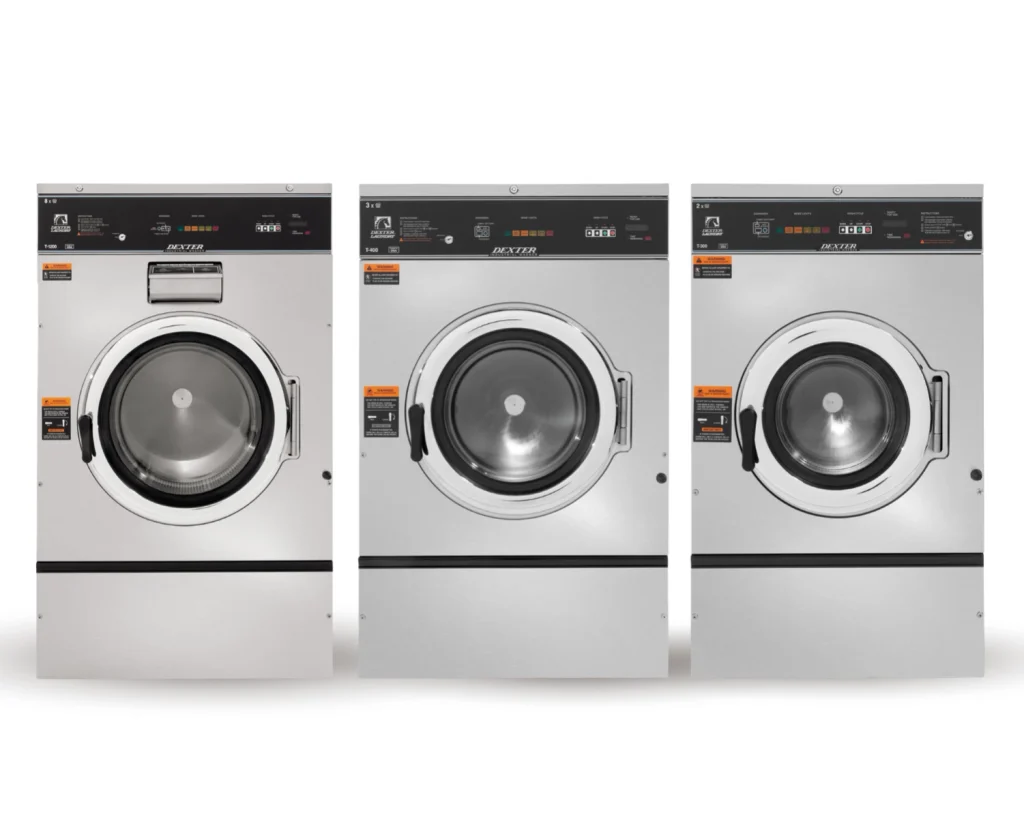
If linens leave the washer holding too much moisture, your dryers have to remove that additional water. Drying cycles may take longer, energy consumption can increase, and the dryer can become a bottleneck in the OPL workflow. That’s why extraction performance matters. A properly specified commercial washer-extractor can remove a significant amount of moisture before linens reach the dryer, so it makes sense to evaluate washer and dryer performance as one connected system.
Longer drying times can also have other causes, including restricted airflow, maintenance issues, incorrect cycle settings, overloading, or aging equipment. So, don’t automatically assume you need a larger dryer. First, determine why drying is taking longer. If towels or linens that once dried in a normal cycle increasingly require extra time, track the average drying time for your most common loads and compare it with the machine’s previous performance under similar load and operating conditions. Once you have actual numbers, gradual changes in performance become much easier to spot.
Preventive maintenance isn’t only about controlling repair costs. In its guidance for hospital laundry operations, OSHA identifies lint buildup in laundry areas and dryer lint traps as a potential fire hazard and emphasizes routine cleaning and maintenance.
Consider what happens when a washer goes down.
The repair invoice is only one part of the cost. Staff may need to rearrange loads, move laundry to another machine, work around reduced capacity, or extend operating hours. Meanwhile, linen turnaround slows and the remaining equipment takes on additional cycles. In a busy hotel, for example, losing one washer can leave housekeeping waiting longer for towels and linens while staff push additional loads through the remaining machines. The same problem can affect a senior living facility where routine linen and resident laundry still has to be completed regardless of which machine is out of service.
In practice, laundry equipment downtime has both a direct and an indirect cost.
A useful approach is to keep a simple maintenance record for each machine. Track repair dates, parts, labor costs, downtime, and recurring problems. Over time, you’ll get a much better picture of which machines are still economical to maintain.
A machine that needs an occasional repair may have plenty of useful service life left. In contrast, a machine with recurring failures and declining performance may be consuming money that could instead go toward a planned equipment upgrade.
This is also where reliable local service matters. Southeastern Laundry Equipment supports commercial facilities with equipment planning, installation, maintenance, parts, and ongoing service. That allows OPL operators to look beyond the initial purchase and consider how their equipment will be supported throughout its working life. If repair costs and downtime are becoming harder to justify, it may be worth comparing the cost of keeping the existing machine with the cost of a planned replacement.
Are repair costs starting to add up?
Southeastern Laundry Equipment can help you evaluate your current OPL setup and explore equipment options that fit your facility’s workload, space, and operating needs.
Review Your OPL Equipment OptionsWater consumption affects more than the water bill. Every unnecessary gallon entering a washer adds to water use and may also increase the energy and laundry chemistry required for the wash process. As a result, an inefficient washer can affect several operating expenses at the same time.
Modern commercial washers can offer more precise control over water levels and wash programs. However, simply buying the newest machine isn’t the goal. The equipment needs to be appropriate for your facility’s actual laundry volume and textile mix.
For example, a hotel processing large volumes of sheets and towels has very different laundry requirements from a fire department processing specialized garments or an assisted living facility managing both linens and resident laundry. Those differences affect everything from the capacity you need to the cycles you run each day. When reviewing commercial laundry equipment, look at water consumption alongside capacity, extraction performance, cycle flexibility, durability, and expected daily throughput.
A simple cost-per-load model can make equipment decisions more objective.
| Cost factor | What to measure | Why it matters |
|---|---|---|
| Water | Gallons used per cycle | Affects water and sewer costs |
| Energy | Electricity or gas per cycle | Directly affects utility expenses |
| Drying | Average drying time | Longer cycles consume more energy and reduce throughput |
| Chemicals | Detergent and chemistry per load | Overuse increases operating costs |
| Labor | Staff time per finished load | Inefficient workflow raises processing costs |
| Repairs | Annual maintenance and repair spend | Helps identify aging equipment |
| Rewash | Rewash rate | Repeats water, energy, chemical, and labor costs |
| Downtime | Hours unavailable for production | Reduces usable OPL capacity |
This approach changes the conversation from “How much does this washer cost?” to “How much will this washer cost us to operate?”
For an OPL facility, that’s usually the more important number.
A load that needs to be washed twice costs much more than detergent.
You’re also repeating labor, water consumption, heating, machine time, chemical use, and at least part of the drying process. Furthermore, the repeated load takes machine capacity away from other laundry waiting to be processed.
Rewash is sometimes treated as an unavoidable part of running a busy laundry room, but recurring rewash deserves a closer look. Start tracking why loads are being washed again. Common causes can include incorrect wash programs, improper chemical dosing, overloaded machines, inconsistent sorting, equipment problems, or stains that weren’t treated correctly before washing.
Once you identify the cause, you can determine whether the solution is better staff training, revised processes, equipment maintenance, improved chemical control, or an equipment upgrade.
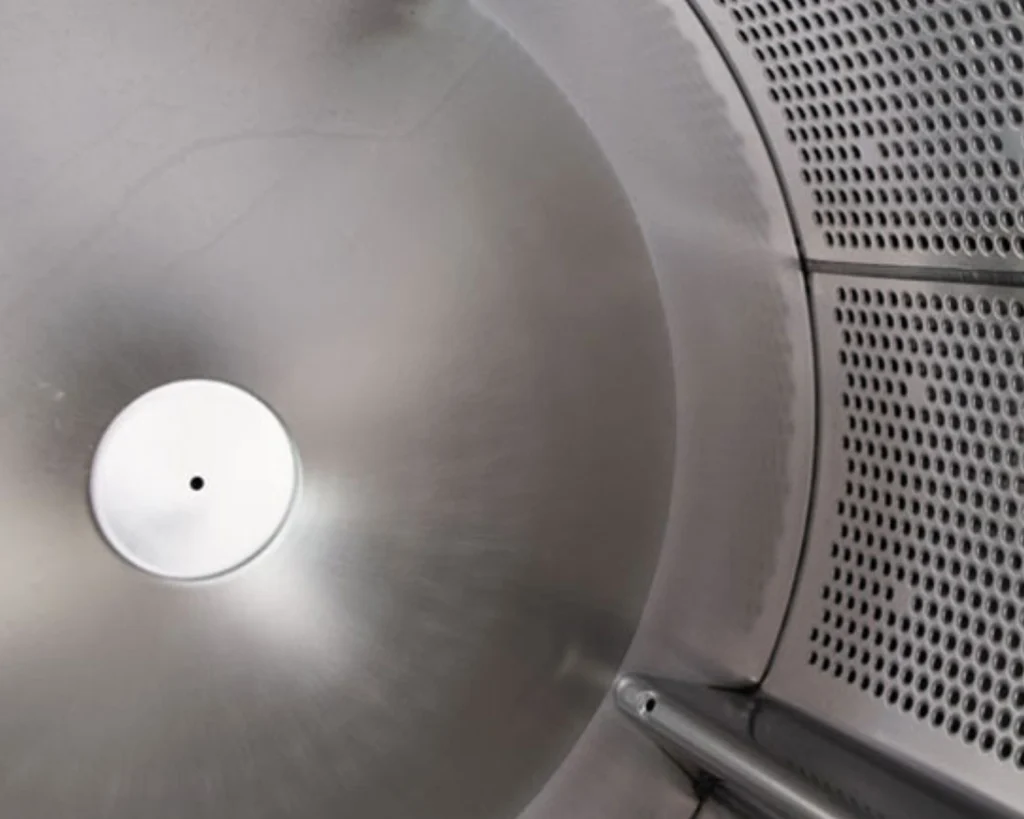
Modern OPL controls can also give operators greater control over programs and machine performance.
For example, programmable cycles can help standardize how different textiles are processed. In addition, some commercial laundry systems provide monitoring, performance reporting, service histories, and alerts.
Those features aren’t simply technology for technology’s sake. Used properly, they can help managers identify problems sooner and create more consistent laundry processes.
Southeastern Laundry works with facilities to select and configure OPL systems based on daily volume, workflow, space, and operational requirements rather than treating every laundry room the same. If your current equipment offers limited control over wash programs or makes consistent results difficult to achieve, exploring newer OPL equipment can help you see which options may better fit your operation.
Could your laundry room be working more efficiently?
Explore on-premise laundry equipment and solutions designed around real production demands, from wash capacity and cycle control to drying and daily workflow.
Explore On-Premise Laundry SolutionsBusy equipment isn’t always productive equipment.
If your washers and dryers run almost continuously and staff still struggle to maintain linen availability, your OPL may have a capacity or workflow problem.
Perhaps the washers are too small for your current volume. Alternatively, dryer capacity may not match washer output. In other cases, a poor laundry room layout creates delays between sorting, washing, drying, folding, and redistribution.
Growth can also expose equipment that was appropriately sized five or ten years ago but no longer fits the facility.
For example, a hotel may have added rooms, increased occupancy, expanded food and beverage operations, or upgraded amenities without making a corresponding change to its laundry capacity. The first sign may not be a broken machine at all. Instead, housekeeping may find itself waiting on towels during high-occupancy periods while laundry staff run equipment later into the day just to catch up. A healthcare or senior living facility can face a similar problem as linen and resident laundry volume grows beyond what the original equipment was sized to handle.
Before adding another machine, calculate your actual production requirements.
Consider pounds of laundry processed per day, operating hours, loads per machine, cycle times, peak periods, and expected future demand. Then evaluate the laundry room as a complete production system.
Sometimes additional capacity is the answer. However, better-sized equipment, improved extraction, faster processing, or a more efficient layout may solve the problem without simply filling every available space with another machine.
You can’t improve what you can’t see.
If your current equipment gives managers little insight into cycle performance, usage, service issues, or operating patterns, identifying waste becomes more difficult. This doesn’t mean every OPL needs the most sophisticated controls available. Instead, the level of technology should match the size and complexity of the operation.
Consider a facility running several washers throughout the day. One machine may be handling considerably more loads than the others, while another may be experiencing longer cycles or recurring faults. Without useful operating data, those patterns can be easy to miss until they begin affecting throughput or repair costs. Better visibility gives the facility manager a chance to investigate the problem earlier rather than waiting for a breakdown or a backlog of laundry.
A smaller operation may primarily benefit from programmable wash cycles and straightforward controls. Meanwhile, a higher-volume OPL may gain more value from machine monitoring, error alerts, performance data, and centralized management capabilities. When managers can see how equipment is actually being used, they can make better decisions about scheduling, preventive maintenance, cycle selection, staff training, and future equipment investments.
There isn’t a universal age at which every washer or dryer should be replaced. Instead, look at the combined evidence. If utility consumption is climbing, repairs are becoming frequent, drying takes longer, rewash is increasing, and your team struggles to meet daily volume, the economics of keeping an older machine may be changing.
Comparing the two options side by side can help put the decision into perspective.
| Option | What to consider |
|---|---|
| Keep existing equipment | Lower immediate capital expense, but potentially higher utility, maintenance, downtime, labor, and operating costs. |
| Upgrade equipment | Higher initial investment, but potentially lower resource consumption, improved throughput, better controls, greater reliability, and more predictable performance. |
The right choice depends on the numbers for your facility.
For that reason, it’s more useful to calculate the expected total cost of ownership than to focus solely on purchase price. Include installation, utilities, maintenance, expected service life, financing or leasing costs, productivity, and anticipated repair expenses.
This creates a much more useful basis for comparing commercial laundry equipment.
Once you’ve identified an equipment problem, resist the temptation to simply replace a machine with the closest modern equivalent.
Your operation may have changed considerably since the original laundry room was designed.
Instead, review your daily processing volume, peak demand, available utilities, physical layout, staffing, textile types, and plans for future growth. Then determine how washers, dryers, finishing equipment, and workflow should work together.
Southeastern Laundry Equipment helps facilities plan and improve on-premise laundry systems, including equipment selection, system design, installation, and ongoing service. Its OPL solutions cover environments including hospitality, healthcare, nursing and assisted living, fire departments, fitness facilities, and other commercial operations.
Facilities can also explore purchase and leasing options depending on their capital and operating priorities.
That broader approach matters because the best machine on paper isn’t necessarily the best machine for your laundry room. A well-designed OPL should match equipment capacity to real production requirements while making it easier for staff to keep laundry moving efficiently.
An aging washer or dryer doesn’t have to stop working completely before it starts costing your facility more than it should. The better question is whether the machine still makes financial and operational sense for the amount of laundry you’re asking it to process.
Start with your current numbers. Measure utilities, repair expenses, drying times, rewash rates, downtime, and daily throughput. Look at how those figures have changed over time, and pay particular attention to equipment that repeatedly slows production or requires staff to work around it. That gives you a much stronger basis for deciding whether continued repairs or an equipment upgrade makes more sense.
If the numbers point toward replacement, Southeastern Laundry Equipment can help evaluate your current OPL setup and identify commercial laundry equipment suited to your facility’s workload, available space, utilities, and operational goals. The objective isn’t simply to install newer machines. It’s to build an on-premise laundry setup that can handle the work you actually need to get done while giving you better control over long-term operating costs.
Ready to take a closer look at your OPL equipment?
Tell Southeastern Laundry Equipment about your facility, current equipment, and laundry needs. Our team can help you identify commercial laundry equipment suited to your workload and operation.
Request an OPL Equipment QuoteStart by tracking the expenses that have the greatest impact on each finished load, including water, energy, labor, chemicals, repairs, rewash, and downtime. If those costs are increasing, look for specific causes such as longer drying times, inefficient wash cycles, frequent equipment problems, or machines that no longer match your facility’s laundry volume. Reducing on-premise laundry costs often comes down to improving the entire process rather than focusing on a single utility bill.
Age alone isn’t the best indicator. Frequent repairs, increasing utility consumption, longer cycle times, recurring downtime, higher rewash rates, and difficulty keeping up with daily laundry volume can all signal that equipment deserves a closer evaluation. Comparing the ongoing cost of operating and repairing the existing machine with the total cost of a replacement can help determine whether an upgrade makes financial sense.
It can, particularly when existing equipment is inefficient, poorly sized, or requiring frequent repairs. Newer commercial washers and dryers may offer improved water management, extraction performance, programmable cycles, monitoring capabilities, and other features that can help reduce resource use or improve productivity. Actual savings depend on factors such as laundry volume, utility rates, equipment selection, cycle requirements, and how the laundry room is operated.
Longer drying times aren’t always caused by the dryer itself. Linens may be entering the dryer with too much retained moisture because of washer extraction performance. Restricted airflow, overloading, maintenance issues, incorrect settings, and aging equipment can also increase drying time. Tracking drying times for similar loads can help identify whether performance is gradually changing.
Look beyond the purchase price of individual machines. Consider your daily laundry volume, peak demand, available utilities, room layout, staffing, textile types, washer and dryer capacity, extraction performance, workflow, service requirements, and expected future growth. The goal is to select equipment that works as part of a complete OPL system and fits the way your facility actually processes laundry.
Yes. Southeastern Laundry Equipment works with commercial facilities to evaluate on-premise laundry needs and identify equipment suited to their workload, available space, utilities, workflow, and operational goals. If rising on-premise laundry costs, recurring repairs, or capacity problems are prompting you to consider an upgrade, Southeastern Laundry can help you explore OPL equipment and replacement options.