
An on-premise laundry emergency plan helps facilities keep essential linen, towel, and uniform processing under control when power outages or severe weather interrupt normal operations. Without a clear plan, a short disruption can quickly affect sanitation, staffing, guest service, patient care, or resident comfort.
For hotels, healthcare facilities, senior living communities, fire departments, universities, and other OPL environments, laundry supports daily service. Continuity planning should address the laundry room alongside food service, communications, and life-safety systems. The goal is not to keep every machine running at full capacity, but to protect people, preserve equipment, process essential textiles, and return to normal production safely.
An on-premise laundry emergency plan is a written process for protecting staff, equipment, utilities, inventory, and essential laundry output before, during, and after a disruption. It should cover power loss, surges, flooding, severe weather, equipment failure, and restricted access.
Because OPL operations depend on electricity, water, drainage, gas, ventilation, chemicals, and trained employees, one failure can create several problems. For example, an outage may stop washers mid-cycle, disable chemical dispensing, and interrupt ventilation. Meanwhile, a storm may delay employees or linen distribution.
Begin by documenting the people, equipment details, and operating decisions employees will need during an interruption.
| Plan element | What to document |
|---|---|
| Authorized personnel | Identify who may stop, isolate, inspect, and restart laundry equipment. |
| Utility controls | Record the locations of electrical disconnects and gas, steam, and water shutoffs. |
| Load priorities | Define which linen, towel, garment, and sanitation loads must be processed first. |
| Emergency supplies | List the linen reserves, chemicals, PPE, tools, and replacement parts kept on site. |
| Key contacts | Include service technicians, utility providers, facility leaders, safety personnel, and emergency services. |
These details give employees a reliable starting point, but they should not be stored only in one manager’s phone or memory. Keep a printed copy in a clearly labeled emergency binder stored in a secure, water-resistant location, along with a digital copy that authorized leaders can access remotely.
During limited operations, the normal laundry schedule may no longer work. Creating a load-priority matrix before an outage gives managers a practical way to allocate limited labor, utilities, and machine time. The matrix should reflect health, safety, regulatory, and operational needs rather than departmental preference.
For example, a healthcare facility may prioritize patient linens and staff garments. A hotel may prioritize sheets, towels, and housekeeping cloths. Likewise, a fire department may prioritize station bedding, towels, cleaning cloths, and standard-duty uniforms ahead of nonessential items. Structural firefighting PPE should follow the department’s separate cleaning, inspection, and handling procedures for protective ensembles.
| Priority level | Typical OPL loads | Operating decision |
|---|---|---|
| Priority 1: Essential | Patient linens, resident bedding, standard-duty uniforms, station linens, and sanitation textiles | Process first when utilities and staffing allow. |
| Priority 2: Operational | Guest-room sheets, towels, food-service linens, and routine uniforms | Process after essential demand is stable. |
| Priority 3: Deferrable | Decorative linens, low-use items, and nonurgent specialty pieces | Hold until normal capacity returns. |

Set a minimum daily quantity for each Priority 1 item so managers have a clear production target during reduced shifts. The plan should also identify textiles that may safely bypass nonessential finishing steps without affecting sanitation, quality, or facility requirements.
However, do not change wash formulas, temperatures, chemical concentrations, or handling practices without reviewing the facility’s established policies, applicable requirements, textile specifications, chemical guidance, and equipment manufacturer instructions. In healthcare settings, involve the infection prevention team and other designated authorities before changing a validated laundry process. Safe processing still comes first.
Commercial laundry backup power requires more planning than connecting a portable generator. Washers, dryers, water heaters, pumps, and exhaust equipment can create substantial demand, so a qualified electrician and the equipment provider should review electrical loads, startup requirements, transfer equipment, fuel storage, and local codes.
Powering the entire laundry plant may not be practical. A staged backup-power plan could instead support emergency lighting, access controls, one selected washer, the chemical dispensing system and its controls, sump pumps, and other systems required for safe operation.
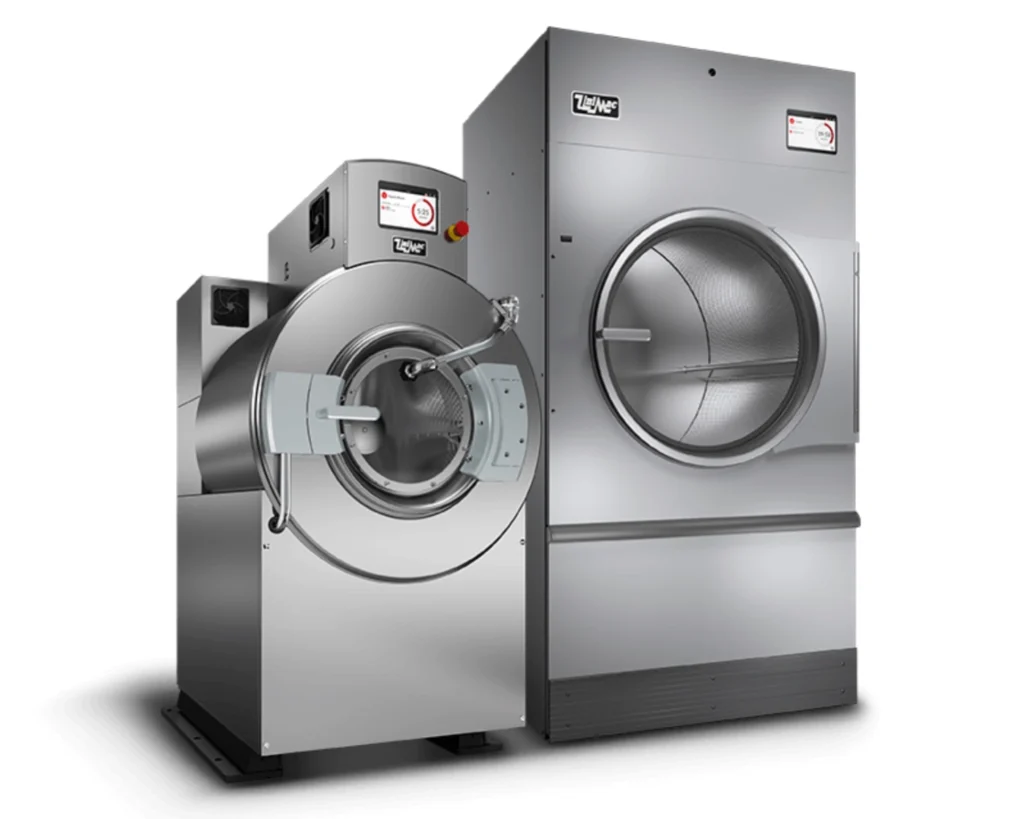
Begin by separating life-safety systems from production equipment, then rank each machine according to its usefulness during reduced operations. In some facilities, a smaller washer may be the most practical choice because it can process essential loads while using less power and water.
Document electrical requirements and disconnect locations as part of the same process. Keep manuals, panel schedules, and utility diagrams with the emergency plan so technicians can assess the system more quickly.
Facilities should also consider the supporting systems that make laundry production possible. For example, a washer may receive power while the chemical dispensing system, water heater, drain pump, or ventilation system remains offline. As a result, powering one machine does not always mean it can operate safely.
Portable generators should be operated outdoors only, at least 20 feet from buildings, with the exhaust directed away from doors, windows, vents, and occupied areas. Never operate one in a laundry room, basement, garage, carport, or another enclosed or partially enclosed space. Sensitive appliances and electronics should also be disconnected or protected according to the facility’s approved power-outage procedures.
Only trained and authorized personnel should operate the system. The Ready.gov power outage guidance provides additional safety steps for facilities and employees.
Test the generator under realistic load rather than relying only on a basic startup inspection. A unit may run normally at first but fail when several motors start together. Fuel supplies, batteries, transfer switches, and maintenance records should be reviewed on the facility’s established testing schedule.
Power restoration can be as disruptive as the outage itself because voltage fluctuations may affect control boards, chemical pumps, payment systems where used, and other sensitive electronics. Surge protection should be included in the laundry power outage plan rather than considered only after equipment is damaged.
The FEMA Ready Business Power Outage Toolkit recommends surge protection for important equipment along with a documented generator maintenance, operation, and fueling plan. Facility leaders can use the toolkit to develop and review those procedures.
Ask an electrician whether the laundry needs panel-level surge protection, point-of-use protection, or both. Label machine disconnects clearly so staff know which systems they are authorized to shut down.
Once power returns, inspect the room and confirm that utilities are stable before restarting equipment. Bring systems online according to the facility’s approved sequence rather than starting every machine at once. A controlled restart reduces demand spikes and gives staff time to identify leaks, alarms, drainage problems, or control errors.
Severe weather laundry operations should move into readiness mode before conditions become dangerous. Once a credible watch or warning is issued, review staffing, linen levels, fuel, chemical inventory, and equipment status. Complete essential loads early when possible, then move clean linen away from exterior doors, windows, low shelves, and known flood areas. Chemicals should be secured, accessible drains cleared, lint and combustible debris removed, and machine doors placed in the shutdown position recommended by the manufacturer.
Flood-prone facilities should identify likely water-entry points and confirm that floor drains, sump pumps, backflow devices, water sensors, and automatic shutoff systems are working properly. If evacuation or building closure becomes likely, avoid beginning cycles that cannot be completed before employees must leave. A washer left full of water, chemicals, and textiles can make damage assessment and recovery more difficult, so staff should follow the approved shutdown procedure while conditions remain safe.
A strong OPL business continuity plan includes enough inventory to support Priority 1 production during a temporary disruption without filling storage areas with unnecessary supplies. Each inventory category should have a defined quantity, storage location, and person responsible for monitoring it.
Set reserve levels according to daily usage, supplier lead times, and the operating period defined in the continuity plan. A facility might prepare for a specific number of Priority 1 loads during a two-day disruption, although the final target will vary by operation. A senior living community may need additional bedding during hurricane season, while a hotel may plan around winter transportation and staffing delays.
An on-premise laundry operation gives a facility direct control over scheduling, wash quality, textile handling, and turnaround time. The emergency plan should protect that in-house capability rather than treat outside processing as a permanent replacement. Still, a temporary contingency arrangement can help prevent a complete service interruption while equipment, utilities, or building access are being restored.
Depending on the facility, temporary support might come from a sister property, an emergency equipment rental company, a linen reserve agreement, or a local processor that can handle clearly defined overflow loads. Before an emergency occurs, document available capacity, transportation responsibilities, textile-separation requirements, pricing, turnaround expectations, and who has authority to activate the arrangement. Once normal operations resume, the facility can return to its established OPL process without losing long-term control of laundry production.
When laundry output drops, the rest of the facility needs clear and timely instructions. Without a coordinated message, departments may hoard linens, submit nonessential loads, or repeatedly contact the laundry team for updates. Each communication should briefly explain what happened, which items remain available, which loads have priority, and when the next update will be provided. Even when the repair timeline is uncertain, scheduled updates are more useful than silence.
The details should reflect the needs of each audience. Housekeeping may need revised room-turn schedules, nursing teams may need linen-conservation guidance, and front-desk employees may need a simple explanation for guests. Designate one person to approve these messages, then distribute them through familiar channels such as email, text, radio, internal messaging, or posted notices. Consistent information helps departments adjust their work without creating additional pressure on the laundry team.
Emergency preparedness starts long before the weather changes. In fact, routine commercial laundry equipment maintenance can prevent a manageable disruption from becoming a shutdown.
Inspect water connections, drains, belts, seals, and exhaust systems for wear, leaks, or blockage. Review recent error codes, listen for unusual noise or vibration, clean lint areas, and confirm that ventilation paths are clear. Small faults that seem manageable during normal operation can become more serious after a power interruption.
A complete service history can help technicians diagnose failures more quickly. Keep model and serial numbers, recent error codes, replacement-parts information, and maintenance records together in one accessible file.
Southeastern Laundry Equipment supports on-premise laundry facilities with equipment planning, installation, parts, maintenance, and commercial laundry repair. Its OPL resources focus on strengthening in-house operations rather than replacing them.
Could your laundry room recover quickly after an outage?
Southeastern Laundry Equipment can help you review equipment condition, capacity, maintenance needs, and service planning so your OPL is better prepared for an interruption.
Talk With an OPL Equipment SpecialistA written checklist helps employees act consistently when time is limited. Each step should reflect the facility’s equipment, utilities, manufacturer instructions, and safety rules.
These steps give the recovery team a clearer record of the laundry room’s condition. In addition, photos may help document equipment or building damage.
Never ask untrained staff to open electrical panels, repair gas systems, bypass safety devices, or energize wet equipment. Instead, call qualified building personnel, electricians, or laundry equipment technicians.
A plan is useful only when employees can find it, understand it, and follow it under pressure. Review the document according to the schedule required by the facility, insurer, accreditation program, or local authority, and revisit it after major changes to equipment, staffing, utilities, or the building. When no outside schedule applies, establish a recurring internal review and testing schedule so contacts, responsibilities, and operating priorities remain current.
A tabletop exercise can reveal problems without interrupting production. Ask what would happen if an outage occurred during the busiest shift, who would decide which loads continue, and how the team would respond if backup power supported lighting but not production equipment. During the exercise, verify contact numbers, confirm access to equipment records, review current linen demand, and record lessons from previous outages or near misses. Even a brief review may uncover missing contacts, unclear authority, inaccessible shutoffs, or unrealistic inventory assumptions.
Keeping laundry operations running during power outages and severe weather requires more than a generator. It requires the right equipment mix, dependable utilities, trained employees, preventive maintenance, emergency inventory, and a safe restart process.
Southeastern Laundry Equipment works with OPL facilities to plan and support commercial laundry systems around real production needs. This support may include evaluating equipment capacity, replacing unreliable machines, improving maintenance coverage, confirming emergency service contacts, and arranging technician support before the next disruption occurs.
Planning an OPL equipment upgrade?
Request equipment recommendations based on your facility’s laundry volume, available space, workflow, and business-continuity needs.
Request an OPL Equipment QuoteUltimately, an on-premise laundry emergency plan protects more than washers and dryers. It helps maintain clean-linen availability, sanitation standards, and essential services when the facility is under pressure. Prepare the plan now, test it with your team, and update it as your operation changes.
An on-premise laundry emergency plan should identify essential loads, authorized staff, utility shutoff locations, emergency contacts, backup-power priorities, critical inventory, and safe shutdown and restart procedures. It should also explain how the facility will communicate delays to employees, residents, patients, guests, or other departments.
The plan should match the equipment, utilities, staffing, and safety requirements of the facility rather than rely on a generic template.
An OPL may be able to continue limited production if the facility has properly planned backup power and the supporting systems remain available. Washers and dryers may depend on water heating, drainage, ventilation, chemical dispensing, gas, steam, and electrical controls, so powering one machine does not automatically make it safe to operate.
A qualified electrician and commercial laundry equipment professional should help determine which systems can be supported and how equipment should be restarted.
Facilities should process loads according to health, safety, sanitation, and operational needs. Patient linens, resident bedding, sanitation textiles, standard-duty uniforms, and other essential items will often take priority over decorative linens or nonurgent specialty pieces.
The exact order will vary by facility. A hospital, hotel, senior living community, university, and fire station will each have different daily requirements.
Not every on-premise laundry needs a generator large enough to power the entire operation. In many cases, a staged backup-power plan may focus on emergency lighting, access controls, sump pumps, chemical dispensing controls, and selected laundry equipment.
Generator size, placement, transfer equipment, and fuel planning should be reviewed by qualified professionals. Portable generators must also be operated outdoors and away from building openings.
Facilities can reduce surge-related risk by having a qualified electrician evaluate panel-level and point-of-use surge protection. Sensitive components may include washer and dryer controls, chemical pumps, payment systems, and other electronic equipment.
Once power returns, staff should confirm that utilities are stable and restart equipment according to the facility’s approved procedures instead of turning on every machine at once.
Emergency inventory should focus on supplies that support essential production. This may include a defined reserve of critical linens, approved laundry chemicals, personal protective equipment, spill supplies, flashlights, batteries, equipment-specific parts, and printed operating records.
Reserve levels should reflect daily usage, supplier lead times, available storage, and the length of disruption the facility is preparing to manage.
The plan should be reviewed according to requirements set by the facility, insurer, accreditation program, local authority, or internal safety policy. It should also be updated after major changes to laundry equipment, utilities, staffing, workflow, or the building.
Tabletop exercises can help employees test the plan and identify missing contacts, unclear responsibilities, inaccessible shutoffs, or unrealistic inventory levels.
Facility managers should involve operations leaders, safety personnel, maintenance staff, electricians, equipment manufacturers, and other specialists relevant to the site. Healthcare facilities may also need input from infection prevention and compliance teams.
Southeastern Laundry Equipment can help OPL operators evaluate equipment capacity, maintenance needs, service coverage, replacement options, and other factors that support a more resilient laundry operation. Facilities can contact Southeastern Laundry Equipment to discuss their current setup and continuity-planning needs.