
Apartment laundry equipment planning is one of the most important decisions developers and property managers make when building a new multifamily community. The right equipment mix can reduce resident frustration, support daily convenience, and help the laundry room operate smoothly from the start.
For new apartment complex developments, laundry is not just another utility space. It is a shared amenity that residents use every week. Therefore, the number, size, and type of machines should be planned with the same care as parking, package rooms, fitness centers, and common areas.
When a laundry room is underbuilt, residents notice quickly. Long wait times, crowded rooms, and out-of-order machines can create avoidable complaints. However, when the laundry room is planned well, it becomes a quiet advantage for the property. Residents can wash clothes when they need to, families can handle larger loads, and property teams can manage the space with fewer disruptions.
That is why a thoughtful approach matters. Instead of choosing machines based only on square footage or a basic unit count, multifamily housing teams should look at real resident behavior, building layout, household size, payment preferences, and long-term service needs.
A planning partner with multifamily experience can help make these decisions easier. Southeastern Laundry Equipment supports apartment communities with commercial laundry equipment, payment technology, and service programs designed for multifamily housing properties across the Southeast. Their site notes support for apartment complexes, dormitories, and other shared residential laundry settings.
Planning a laundry room for a new apartment community?
Southeastern Laundry Equipment can help you think through machine count, capacity, layout, payment options, and service access before construction decisions are locked in.
Plan Your Apartment Laundry RoomThe equipment mix is the balance of washers, dryers, machine capacities, payment systems, and supporting features in a shared laundry room. In multifamily housing, that mix affects more than convenience. It can shape how residents feel about the property, how often maintenance issues come up, and how easily the laundry room handles daily use.
A small community with mostly studio apartments may not need the same setup as a garden-style property with many two- and three-bedroom units. A student housing property may see heavier demand in short windows, while a senior living community may need a room that places more emphasis on accessibility, simple controls, and comfortable movement through the space. Because of these differences, apartment laundry equipment planning should begin before construction is finalized, when utility requirements, ventilation, drainage, electrical capacity, room flow, and service access can still be adjusted without creating avoidable delays.
The goal is to avoid two common problems: underbuilding the laundry room and overbuilding it. Underbuilding can lead to long waits and resident complaints, while overbuilding can waste valuable square footage and add unnecessary utility demand. A balanced plan gives the property enough capacity for real resident use without making the laundry room larger or more complicated than it needs to be.
Southeastern Laundry’s multifamily laundry resources emphasize durable machines, modern payment technology, regular maintenance, and responsive service as part of a better resident and property management experience.
Unit count is usually the first planning point because it gives developers and property managers a practical starting estimate for how many washers and dryers may be needed. Still, it should not be treated as the final answer. Two buildings can have the same number of units and very different laundry needs depending on household size, occupancy, resident lifestyle, and whether any units include in-home laundry.
Many multifamily laundry projects begin with a washer-to-unit ratio. Southeastern Laundry’s apartment laundry guidance notes that a typical starting point is one washer and one dryer for every 8 to 12 units, although actual needs can shift depending on occupancy, household size, peak usage patterns, and machine capacity. For example, a 60-unit building may begin planning with five to seven washers and a similar number of dryers. From there, the team should adjust based on the property type rather than relying only on the math.
If most units are studios or one-bedroom apartments, the lower end of the range may be enough. If the property includes many families, roommates, or larger households, the laundry room may need more capacity or a stronger mix of high-capacity machines. Developers should also think about stabilized occupancy. A laundry room that feels adequate during lease-up can become strained once the property is full, especially if the equipment plan was based only on early resident demand.
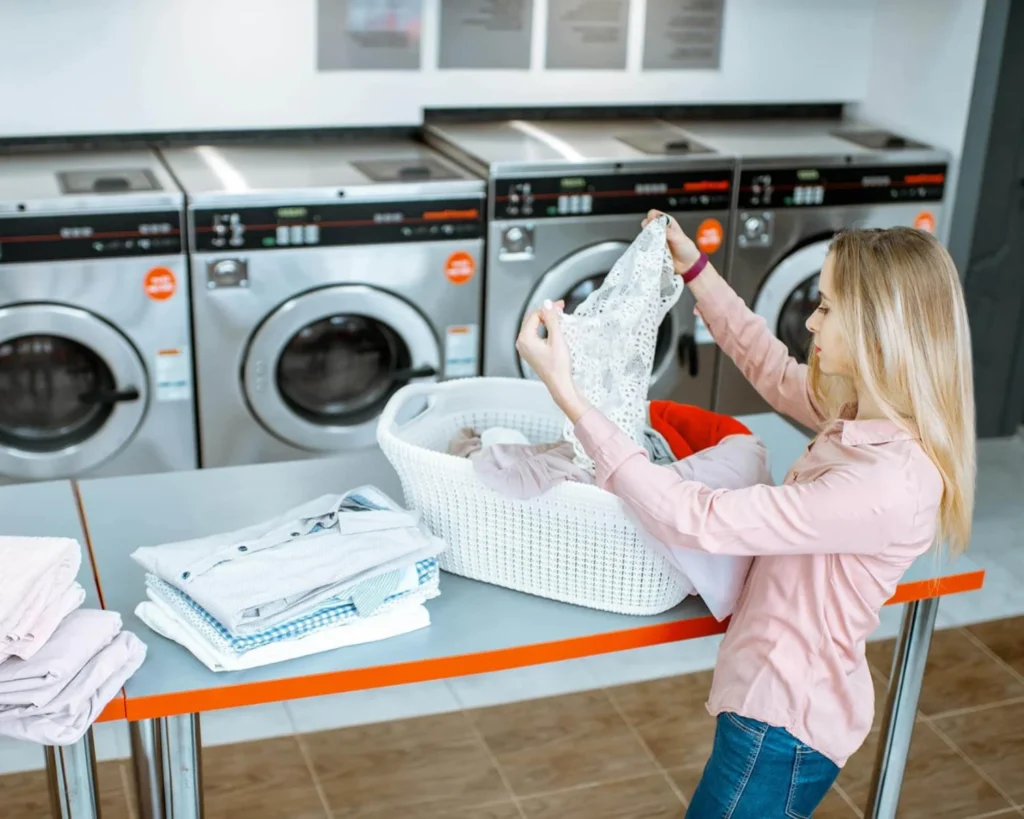
Resident demographics can change the entire laundry equipment mix. Therefore, apartment laundry equipment planning should include a clear look at who is likely to live at the property.
A luxury mid-rise with young professionals may need fast, efficient machines and app-based payment options. Meanwhile, a family-oriented community may benefit from larger-capacity washers that can handle bedding, towels, school clothes, and bulky weekly loads. In contrast, a senior community may place more value on accessibility, simple controls, seating, and a comfortable room layout.
Here is a practical way to think about the equipment mix:
| Property Type | Laundry Demand Pattern | Equipment Planning Consideration |
|---|---|---|
| Studio-heavy apartment building | Smaller, frequent loads | Standard-capacity washers with efficient cycle times |
| Family-focused community | Larger weekly loads | Add high-capacity washers and strong dryer capacity |
| Student housing | Heavy peak-time demand | More machines, durable construction, and easy payment options |
| Senior housing | Consistent routine use | Accessible controls, clear signage, and comfortable layout |
| Mixed-income or mixed-size property | Varied usage | Balanced washer sizes and flexible payment technology |
This table is only a planning guide. However, it shows why a one-size-fits-all approach rarely works well. The best laundry room setup reflects the people who will actually use it.
Commercial laundry equipment matters because shared laundry rooms see frequent use. Residential machines are not designed for the same load volume, cycle frequency, or user variation found in apartment communities.
For multifamily housing, commercial-grade washers and dryers can support stronger performance, better durability, and a more consistent resident experience. Additionally, commercial machines often offer features that help property teams manage the room more effectively, including stronger components, faster cycle options, and compatibility with payment systems.
Energy efficiency should also be part of the decision. ENERGY STAR states that certified commercial clothes washers are, on average, 9% more efficient and use about 45% less water than standard models, which can support lower utility use over time.
However, efficiency should be balanced with performance. Residents care about clean clothes, dry clothes, and reasonable cycle times. Therefore, the best choice is not always the smallest machine or the model with the lowest projected utility use. Instead, the goal is to choose equipment that fits the building’s usage pattern while supporting reliable daily operation.
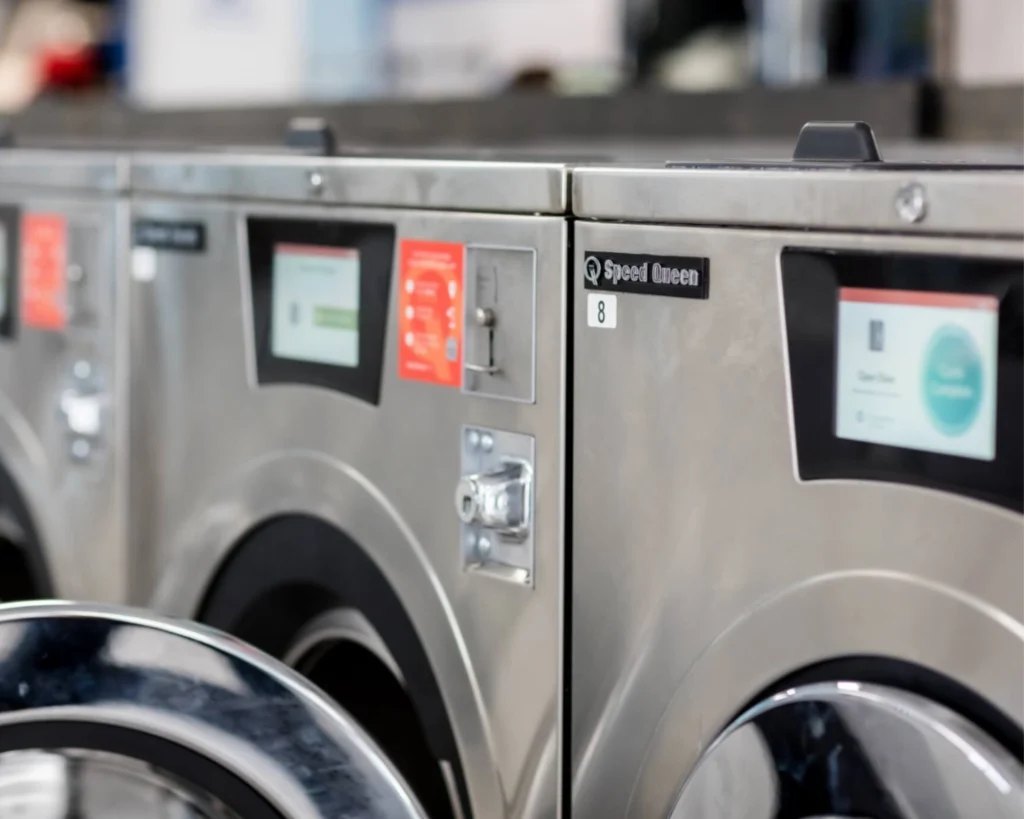
A strong apartment laundry equipment planning strategy often includes more than one washer size. Standard machines can handle everyday loads, while high-capacity machines can serve residents who need to wash comforters, towels, coats, or family-size loads.
This mix can improve the resident experience in several ways. First, it gives residents more control over how they do laundry. Second, it may reduce the number of cycles needed for large loads. Third, it helps prevent residents from overloading smaller machines, which can lead to poor wash results and unnecessary wear.
Dryer capacity should also match washer capacity. If residents wash large loads but cannot dry them efficiently, the room can still become backed up. As a result, larger washers should be paired with dryers that can handle the same demand.
In many multifamily laundry rooms, the dryer side becomes the bottleneck. Clothes often take longer to dry than to wash, especially when residents overload machines or wash bulky items. Therefore, planning teams should avoid assuming that washer count and dryer count always perform equally in real use.
Even when the total machine count looks right on paper, peak usage can create pressure. Depending on the resident mix, laundry rooms may be busier during evenings, weekends, or other shared downtime. Family communities, student housing, and workforce housing can each have different usage patterns, so the equipment plan should leave room for real-life demand rather than assuming residents will spread laundry evenly throughout the week.
This is where machine capacity, not just machine count, becomes important. A property may have enough washers in theory, but if residents frequently wash bedding, towels, uniforms, or family-size loads, smaller machines can still create backups. Likewise, the dryer side of the room can become crowded if drying times are longer than wash cycles or if residents need to split large loads across multiple dryers.
Modern payment and monitoring systems can help properties understand these patterns after opening. Over time, usage data can show whether residents are waiting too long, whether certain machines are used more often, and whether the room needs operational adjustments. For a new development, that data will not exist yet, so the initial plan should be based on likely resident behavior, comparable properties, and guidance from a laundry equipment provider familiar with multifamily housing.
Machine count is only part of the plan. If the room is cramped, poorly lit, or difficult to move through, residents may still view the laundry area as inconvenient.
A good apartment laundry room should allow residents to enter, sort, load, pay, wait, fold, and exit without crowding each other. In addition, service technicians need enough access to inspect, repair, and maintain equipment without disrupting the entire room.
Important layout details include clear walkways, adequate folding surfaces, proper ventilation, good lighting, and visible payment stations. Also, residents should be able to move laundry baskets without squeezing between machines or blocking doors.
Accessibility should be included early as well. Controls, reach ranges, door clearances, and pathways all influence how usable the room is for residents with different mobility needs. When these details are addressed during design, the result is usually better for everyone. HUD’s Fair Housing Act Design Manual includes accessibility guidance for common-use laundry rooms, including accessible appliances and clear floor space.
Payment systems are now a major part of the laundry experience. While some properties still use coin-operated machines, many residents expect flexible options such as mobile payment, cards, or app-based systems.
For property teams, modern payment technology can also provide operational advantages. It can reduce coin collection, simplify reporting, and give residents a more convenient way to start machines. Some systems may also show machine availability or send cycle alerts, which helps residents avoid unnecessary trips to the laundry room.
Southeastern Laundry notes that its multifamily laundry systems combine durable machines with payment technology to support convenience for residents and property teams.
Still, the right payment setup depends on the property. A student housing community may benefit from app-based systems. A senior community may need a simple, easy-to-understand option with clear instructions. A mixed resident base may need more than one payment method.
Therefore, payment planning should happen at the same time as equipment planning. It should not be treated as an afterthought.
Reliable laundry rooms are not only built with good machines. They are built with service in mind.
A well-designed laundry room gives technicians safe, practical access to machines, utility connections, vents, drains, and shut-off valves. This matters because even strong commercial equipment needs routine attention. When machines are difficult to reach or utilities are poorly arranged, service can take longer and create more disruption.
Preventive care also helps protect the resident experience. Southeastern Laundry’s preventive apartment laundry service content explains how regular inspections, scheduled maintenance, performance monitoring, and responsive support can help reduce downtime in shared laundry rooms.
Before finalizing the laundry room design, property teams should walk through a few practical service questions with their equipment provider and construction team. These details may seem minor during planning, but they can make repairs, inspections, and routine maintenance much easier once residents are using the room every day.
The best laundry room is not always the largest one. It is the one that matches demand.
Overbuilding can waste space that could have been used for storage, package handling, bike rooms, or other amenities. It may also add unnecessary utility requirements. On the other hand, underbuilding can create crowding, complaints, and resident dissatisfaction.
The right balance comes from combining unit count, resident profile, equipment capacity, and room design. In addition, property teams should consider whether the laundry room is the only laundry option on site. If no in-unit laundry is available, shared laundry demand will be higher. If some units have in-unit machines while others do not, the shared room may serve a more specific group of residents.
A planning conversation with a laundry equipment specialist can help developers avoid guesswork. Southeastern Laundry works with multifamily housing properties and offers customized programs for different facility needs, according to its multifamily housing page.
Not sure how many washers and dryers your property needs?
Share your unit count, resident profile, and project timeline with Southeastern Laundry Equipment to get practical guidance on the right laundry equipment mix.
Talk With a Multifamily Laundry SpecialistLaundry rooms place demands on water, gas, electrical systems, drainage, and ventilation. Therefore, utility planning should happen early in the development process.
If the equipment mix changes after rough-ins are complete, the project may face delays or added costs. For example, adding high-capacity dryers may require ventilation adjustments. Adding more washers may affect water supply and drainage needs. Similarly, payment systems may require electrical or connectivity planning.
This is another reason apartment laundry equipment planning should involve the design team, property owner, and laundry equipment provider before construction is too far along. Early input helps align the laundry room vision with the building’s actual infrastructure.
In addition, efficient equipment can help manage long-term utility use. However, the room still needs the proper capacity to support resident demand. A laundry room that saves water but creates long wait times will not feel successful to residents.
Residents may not choose an apartment only because of the laundry room, but they will notice when laundry is inconvenient, unreliable, or unpleasant. In multifamily housing, the small weekly experiences often shape how residents feel about the property. Laundry is one of those experiences because it is practical, recurring, and directly tied to daily routines.
When the room is clean, available, and easy to use, it supports the feeling that the property is well managed. Residents can take care of laundry without planning around long waits, broken machines, or confusing payment systems. When the room is consistently crowded or machines are often out of service, the opposite happens. A basic chore becomes a source of frustration, and that frustration can influence how residents view the overall community.
Apartment laundry equipment planning should be treated as part of the resident experience, not just a back-of-house utility decision. The right equipment mix can reduce friction, support larger loads when needed, and make the property easier to live in. This does not require an oversized or luxury laundry room. It requires a room that works consistently for the people who use it.
Choosing the right washer and dryer mix can be difficult because every property is different. Unit count, resident lifestyle, building design, utility capacity, and long-term maintenance all affect the final plan.
That is where a knowledgeable laundry partner can add value. Southeastern Laundry Equipment serves multifamily housing communities and provides support for equipment, payment systems, service, and laundry room planning. The company’s website also lists service across Georgia, Florida, Alabama, Tennessee, and the Carolinas.
The goal is not to push one ownership model or one type of setup. Instead, the goal is to help the property create a laundry room that fits its residents and supports long-term operations.
For developers, that means fewer surprises during planning. For property managers, it means a laundry room that is easier to manage after move-in. For residents, it means fewer delays and a better day-to-day experience.
Apartment laundry equipment planning should begin with a simple question: what will residents need from this space every week?
From there, developers and property managers can choose the right machine count, capacity mix, payment setup, room layout, and service approach. As a result, the laundry room becomes more than a required amenity. It becomes a practical part of the resident experience.
A successful laundry room does not happen by accident. It comes from planning the equipment mix around real demand, choosing commercial-grade machines, allowing for peak usage, and making maintenance easier from day one.
Southeastern Laundry Equipment can help multifamily housing teams make those decisions with more confidence. Whether you are planning a new apartment complex or improving an existing laundry room, the right guidance can help you create a space that works for residents, property teams, and long-term operations.
Ready to make apartment laundry equipment planning easier?
Get help choosing a washer and dryer mix that fits your building, residents, utility needs, and long-term service expectations.
Request Apartment Laundry Equipment GuidanceApartment laundry equipment planning is the process of choosing the right washer and dryer mix for a multifamily laundry room. It includes machine count, equipment capacity, payment options, room layout, utility needs, and long-term service access.
For developers and property managers, the goal is to create a laundry room that fits resident demand without overbuilding the space or leaving residents waiting for available machines.
A common starting point is one washer and one dryer for every 8 to 12 apartment units. However, the right number depends on the property’s unit mix, occupancy, resident profile, laundry habits, and whether residents have in-unit laundry options.
Southeastern Laundry can help multifamily housing teams review these details and plan an equipment mix that fits the building instead of relying on a generic estimate.
Apartment laundry equipment planning matters because laundry rooms are easiest to design before construction decisions are finalized. Early planning helps property teams account for water lines, drainage, ventilation, electrical capacity, room flow, payment systems, and maintenance access.
When these details are handled early, the laundry room is more likely to support resident use from the first day the property opens.
Commercial-grade laundry equipment is usually the better fit for multifamily housing because shared laundry rooms handle frequent use from many residents. These machines are built for higher cycle volume and are often compatible with modern payment systems, monitoring tools, and service programs.
The best equipment mix may include both standard-capacity and high-capacity machines so residents can handle everyday clothing as well as bedding, towels, and larger household loads.
Many apartment laundry rooms benefit from at least some high-capacity machines, especially in family-focused communities or properties without in-unit laundry. Larger machines can help residents wash bulky items like comforters, towels, coats, and family-size loads.
High-capacity equipment should be planned carefully, though. Dryer capacity, room layout, utilities, and resident demand should all support the larger machines.
Property managers should consider the number of units, expected occupancy, household size, resident demographics, machine capacity, payment preferences, accessibility, maintenance access, and peak usage patterns. The laundry room should also have clear walkways, good lighting, folding space, proper ventilation, and easy service access.
Southeastern Laundry works with multifamily properties to help align laundry equipment planning with the way residents actually use the space.
Southeastern Laundry can help multifamily housing teams evaluate machine count, washer and dryer capacity, payment technology, layout needs, and ongoing service considerations. This guidance can be useful for new apartment developments as well as existing properties that need a better laundry room setup.
The goal is to help property teams create a resident-friendly laundry room that is practical, reliable, and easier to manage over time.