
OPL laundry bottlenecks solutions are becoming essential as hospitality operations face increasing pressure to deliver faster turnaround without sacrificing quality. At the same time, many facilities are realizing that speed alone does not fix inefficiencies.
Care homes, however, operate under even greater pressure. They handle mixed loads, strict hygiene requirements, and constant throughput demands. Because of this, they act as a real-world stress test for laundry operations. Therefore, the lessons learned in these environments translate directly into smarter, more resilient OPL strategies for hospitality, healthcare-adjacent lodging, and facilities management.

Before solving anything, it is important to clearly define where bottlenecks actually occur. While many teams assume equipment is the issue, the reality is usually more complex.
In high-demand environments, laundry is rarely uniform. A single shift might include bedding and towels, staff uniforms, delicate garments, and even contaminated items that require special handling. That mix alone creates complexity before a single load even reaches a machine.
The real issue shows up in how that laundry is sorted. When items are grouped incorrectly, cycles become inefficient, fabrics wear out faster, and teams often end up rewashing loads that should have been done right the first time. Over the course of a day, those small inefficiencies add up quickly.
In care homes, this is handled through clearly defined intake routines. Staff know exactly how to separate items the moment they arrive, which keeps the rest of the process moving smoothly. Hospitality operations that adopt a similar approach tend to see fewer delays and more consistent results without needing to increase speed.
Downtime does not just stop operations. It creates a ripple effect across staffing, turnaround times, and guest satisfaction.
For example, when one washer fails, staff are forced to reroute loads or wait, which immediately slows the entire process down. At the same time, dryers may sit idle because there is nothing ready to move forward, and unfinished loads begin to pile up. What starts as a single delay quickly spreads across the operation, creating a backlog that can take hours to recover from.
Even short disruptions can throw off the entire workflow. One delayed load often leads to idle dryers, backed-up carts, and staff waiting around instead of moving forward. Over time, that kind of stop-start operation becomes one of the biggest hidden drains on productivity.
Dealing with constant laundry delays or downtime?
A quick review of your current setup can reveal where bottlenecks are happening and how to fix them without disrupting your operation.
Request an OPL Laundry AssessmentAt this point, modern OPL laundry efficiency strategies shift the focus from reactive fixes to proactive reliability.
Even with strong equipment, poor workflow design wastes time. That is especially true in high-volume settings where OSHA’s hospital laundry guidance shows how workflow and handling practices affect both efficiency and safety. Staff may walk unnecessary distances, repeat tasks, or wait between stages.
Care homes approach this differently by designing workflows that allow staff to move efficiently from one stage to the next. Clean and dirty zones are clearly separated, and each step follows a logical sequence, so staff are not doubling back or waiting unnecessarily.
In practice, that might mean placing washers, dryers, and folding areas in a way that keeps loads moving in one direction. It sounds simple, but small layout decisions like this can save hours of labor over the course of a week. For hospitality teams, adopting a similar setup often leads to immediate improvements without adding extra staff.
Rewashing is one of the most overlooked bottlenecks, yet it quietly drives up costs across the entire operation. Every time a load has to be run again, it uses more water, more energy, and more chemicals, while also putting additional wear on linens.
A common example is improperly sorted loads. When heavily soiled items are mixed with lighter ones, the cycle may not fully clean everything, which leads to a second wash. That not only slows down throughput but also shortens the lifespan of fabrics that are already expensive to replace.
The most effective way to reduce rewashing is not by increasing wash intensity, but by improving consistency at the start of the process. Clear sorting rules, standardized cycles, and better staff training tend to have a much bigger impact than simply trying to run machines faster.

Care homes often operate under stricter and more complex conditions than most hospitality environments, particularly when infection control and mixed laundry streams are involved. In day-to-day operations, their systems are designed to handle complexity without failure.
It may seem counterintuitive, but faster cycles do not always improve efficiency. In fact, rushing often creates more problems than it solves. Loads may come out improperly cleaned, the risk of cross-contamination increases, and teams often end up rewashing items that should have been done right the first time. What feels like saving time in the moment usually leads to more work later.
Care homes prioritize structured workflows instead. Interestingly, taking a more structured approach often leads to faster overall turnaround. Even if individual steps are slightly longer, fewer mistakes and less rework mean loads move through the system more smoothly from start to finish.
Instead of focusing on speed alone, successful operations focus on flow. Structured workflows reduce total turnaround time because each step is predictable and consistent. When intake zones are clearly defined and clean and dirty items are kept separate, staff spend less time figuring out what to do next and more time keeping loads moving. In practice, this kind of structure removes hesitation and prevents small mistakes from turning into bigger delays.
For hospitality teams, adopting this mindset is one of the most effective laundry workflow improvements available.
Both care homes and hospitality environments deal with items that require special handling.
Care homes manage delicate personal clothing alongside heavily soiled items. Similarly, hotels deal with high-thread-count bedding, branded uniforms, and specialty fabrics, all of which require different handling and care depending on the material and level of soiling.
Each category requires different care. Therefore, flexibility becomes essential.
Modern machines allow operators to adjust water levels, cycle times, and chemical dosing based on the specific needs of each load, which makes it easier to handle a wide range of textiles without compromising results.
This is where working with providers like Southeastern Laundry Equipment becomes valuable. Their focus on adaptable OPL systems helps facilities manage complexity without overcomplicating operations.
Technology does not replace staff. Instead, it reduces friction in everyday tasks.
Manual chemical dosing often leads to errors. However, automated systems ensure correct detergent usage, more consistent cleaning results, and reduced waste across every load.
Consequently, both quality and cost control improve.
Staff turnover is a reality in hospitality. That’s where simplifying operations is critical.
Smart machines simplify day-to-day operations by pre-programming optimal cycles, reducing the need for manual decisions, and minimizing user error. This becomes especially valuable in environments with frequent staff turnover, where consistency can otherwise be difficult to maintain.
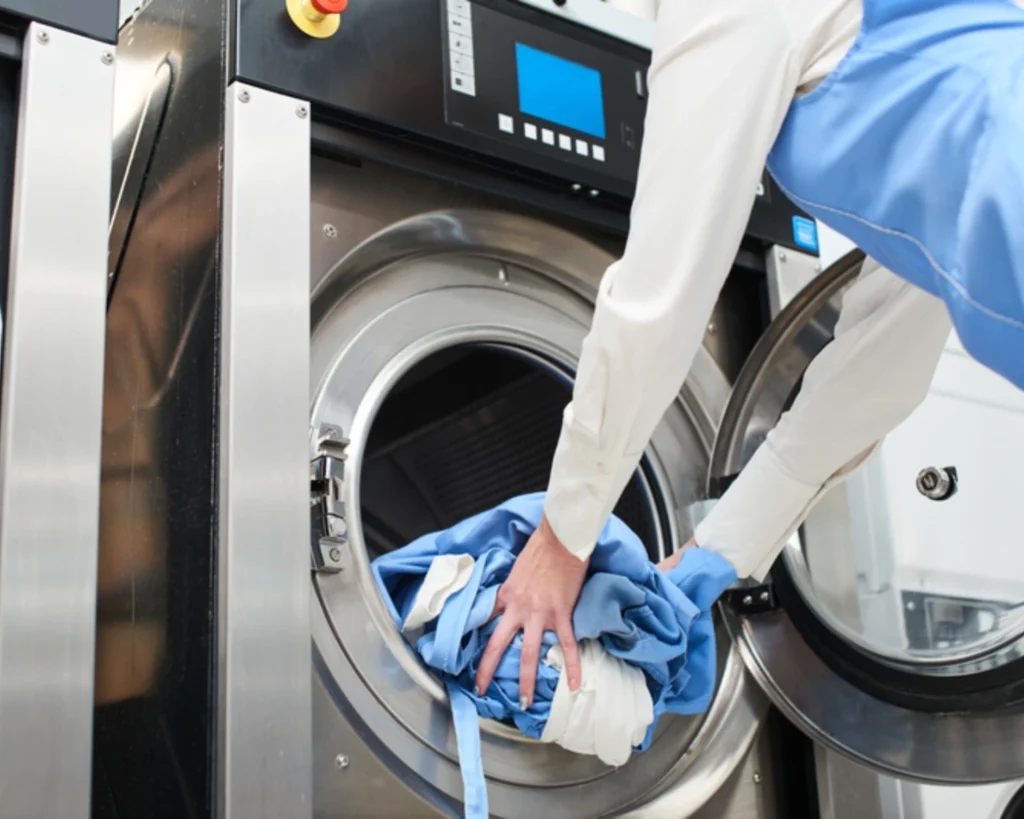
At this stage, once workflows and equipment are aligned, the next challenge becomes visibility. Without a clear understanding of where time and resources are being used, even well-designed operations can start to lose efficiency.
While technology improves performance, visibility is what truly unlocks long-term efficiency. In many OPL environments, one of the biggest challenges is not knowing where delays are actually happening. As a result, teams often focus on the wrong fixes.
Even so, care home laundry operations take a different approach. Because of strict hygiene requirements and audit expectations, they rely heavily on tracking, monitoring, and accountability at every stage of the process. Therefore, they are able to identify inefficiencies early and correct them before they escalate.
In a typical hospitality laundry room, it is common to see loads moving between stations without clear tracking, little visibility into how long cycles actually take, and limited insight into how machines are being used throughout the day. Without that information, managers are often left guessing where delays are coming from, which makes it much harder to fix problems at their source.
This is often why managers rely on assumptions rather than data. Consequently, small inefficiencies compound over time, leading to larger operational issues.
For example, a delay in sorting may appear minor. However, when repeated across dozens of loads per day, it can significantly impact total throughput.
Modern OPL laundry bottlenecks solutions increasingly rely on data to guide decisions. With the right systems in place, operators can track load volumes by category, monitor how frequently machines are being used, measure average cycle completion times, and identify how often rewashing occurs. With that level of visibility, it becomes much easier to pinpoint where inefficiencies are happening.
As operations continue, patterns start to become clearer. Managers can see where delays are happening, which machines are overused, and where inefficiencies are creeping in. Instead of reacting to problems after they escalate, they can make small adjustments early and keep operations running smoothly.
For instance, if certain loads consistently take longer, workflows can be adjusted or machines reprogrammed. Similarly, if specific equipment is overused, loads can be redistributed to balance capacity.
One concern often raised is that adding tracking systems may slow staff down. At the same time, the opposite is usually true.
When processes are clearly defined and supported by technology, staff spend less time making decisions, errors decrease, and training becomes much easier to manage.
Consequently, accountability improves without adding complexity.
Care homes demonstrate this well. Because their processes must meet strict standards, they rely on systems that guide staff rather than burden them. Hospitality environments can benefit from the same approach, especially in high-volume settings.
Another important factor is how well different parts of the laundry process connect. In most traditional setups, washing, drying, and finishing operate as separate stages with little coordination.
However, integrated systems allow for better load sequencing, reduce idle time between stages, and create more consistent throughput across the entire operation.
On a practical level, operations become smoother and more predictable.
Providers like Southeastern Laundry Equipment support this shift by helping facilities design OPL environments where equipment, workflow, and data work together. This kind of alignment is essential for eliminating bottlenecks at scale.
Ultimately, the goal is not just to fix bottlenecks once, but to prevent them from returning. By combining process discipline with data visibility, facilities can continuously refine their operations.
Over time, this creates more stable performance, lowers operating costs, and gives teams greater confidence in meeting demand. Just as importantly, it builds a system that can adapt as needs change instead of falling back into the same bottlenecks.
Leasing is often seen as a financial decision. Even so, in reality, it is an operational strategy.
With leasing, equipment is maintained proactively rather than waiting for something to break. That means downtime is reduced, repairs are handled quickly when needed, and performance stays consistent day to day. Instead of reacting to problems, operations can run with a level of stability that is difficult to achieve otherwise.
Considering a more reliable laundry setup?
Leasing can give you access to high-performance equipment, built-in servicing, and predictable costs without large upfront investment.
Explore Laundry Leasing OptionsThis directly addresses one of the biggest bottlenecks in OPL environments.
Instead of reacting to breakdowns, leasing agreements typically include preventative maintenance, regular inspections, and ongoing performance optimization, which helps ensure that equipment continues to operate reliably without unexpected interruptions.
Therefore, operations remain stable even during peak demand.
Hospitality demand fluctuates. For example, seasonal spikes can overwhelm existing systems.
Leasing also makes it easier to scale operations as demand changes. Facilities can upgrade capacity without large upfront costs, adjust equipment to match seasonal demand, and maintain consistent service quality even during peak periods.
While efficiency improvements are important, decision-makers also need clear financial outcomes.
When workflows improve, staff naturally spend less time on repetitive or unnecessary tasks. Loads move more efficiently through each stage, which means fewer hours are needed to complete the same volume of work. In practice, this allows teams to handle more without increasing headcount.
Better processes have a direct impact on linen lifespan. When loads are handled correctly the first time, there is less fabric damage and fewer rewashes, which helps preserve materials that are expensive to replace. Over time, this reduces replacement costs and keeps inventory more consistent.
Although hospitality does not always face the same regulations as care homes, hygiene expectations are rising, especially around textile handling and laundry hygiene guidance from the CDC.
According to the Centers for Disease Control and Prevention, proper handling and processing of textiles play a critical role.
By applying similar standards, facilities protect both guests and their reputation.
| Factor | Traditional OPL Setup | Optimized OPL (Leasing-Based) |
|---|---|---|
| Equipment Reliability | Reactive repairs | Proactive maintenance |
| Workflow Design | Unstructured | Process-driven |
| Downtime Impact | High disruption | Minimal disruption |
| Labour Efficiency | Inconsistent | Streamlined |
| Chemical Usage | Manual | Automated dosing |
| Scalability | Limited | Flexible |
| Cost Control | Unpredictable | Predictable monthly costs |
Care homes do not have the luxury of inefficiency. That’s why their laundry systems are built to handle pressure, complexity, and risk all at once.
Hospitality operations, while different, face similar challenges at scale. By applying the same principles, facilities can implement effective OPL laundry efficiency strategies that improve both performance and cost control.
Importantly, this is not about working harder. Instead, it is about working smarter with the right processes, technology, and operational model in place.
If your operation is experiencing delays, rising costs, or inconsistent results, it may be time to rethink your approach.
Leasing-based OPL systems offer a practical way to reduce bottlenecks while maintaining full control over your laundry operations.
Ready to eliminate laundry bottlenecks for good?
Whether you’re dealing with downtime, rising costs, or inconsistent results, a tailored OPL solution can help you regain control and improve performance.
Get a Tailored Laundry Consultation Talk to a Laundry SpecialistMost facilities dealing with laundry inefficiencies are trying to solve a few core issues: slow turnaround times, machine downtime, inconsistent results, and rising labor costs. Effective OPL laundry bottlenecks solutions usually focus on improving workflow design, upgrading to more reliable equipment, and introducing better process consistency.
In many cases, the biggest improvements come from fixing how laundry moves through the system rather than simply trying to speed up individual steps.
Care homes operate under some of the most demanding laundry conditions, which makes them a useful model for other industries. They handle mixed loads, strict hygiene requirements, and constant volume without room for error.
Because of this, many OPL laundry bottlenecks solutions used in hospitality are inspired by care home practices, such as structured workflows, clear separation of clean and dirty items, and standardized processes. These approaches help reduce delays and improve overall consistency.
Bottlenecks in OPL environments are usually caused by a combination of factors rather than a single issue. Common causes include poor sorting processes, inefficient workflow layouts, equipment downtime, and a lack of visibility into performance.
For example, when loads are not sorted correctly at the start, it often leads to rewashing later. Similarly, poorly placed equipment can slow staff movement and reduce overall productivity.
Leasing is often one of the most practical ways to address ongoing bottlenecks without major upfront investment. It allows facilities to access modern, high-performance equipment while also benefiting from built-in maintenance and support.
With leasing, downtime is reduced, performance stays consistent, and operations become more predictable. Providers like Southeastern Laundry Equipment help facilities implement leasing-based OPL laundry bottlenecks solutions that focus on long-term reliability rather than short-term fixes.
Technology plays a key role in reducing inefficiencies and improving consistency. Features like automated chemical dosing, programmable cycles, and performance tracking help remove guesswork from daily operations.
With better visibility into load volumes, machine usage, and cycle times, managers can identify where delays are happening and make adjustments before they turn into bigger problems.
Reducing rewash rates starts with improving consistency at the beginning of the process. Clear sorting guidelines, proper cycle selection, and staff training all play a role in ensuring loads are done correctly the first time.
When these elements are in place, facilities can significantly reduce water usage, energy consumption, and fabric wear, which directly impacts operating costs.
Yes, especially for facilities that rely heavily on consistent laundry performance. Addressing bottlenecks not only improves efficiency but also reduces long-term costs related to labor, utilities, and linen replacement.
In practice, even small improvements in workflow and equipment reliability can lead to measurable gains in productivity and service quality.
If your operation is experiencing frequent delays, rising costs, inconsistent results, or staff inefficiencies, it’s likely that bottlenecks are already affecting performance.
A professional assessment can help identify where those issues are coming from and what changes will have the biggest impact. Many facilities find that small adjustments to workflow, equipment, or processes can deliver immediate improvements.