
On-premise laundry equipment allows facilities to process linens, uniforms, and garments directly on site rather than sending laundry to an outside provider. Hotels, healthcare facilities, senior living communities, and athletic programs rely on commercial washers and dryers every day to keep operations running smoothly and ensure clean laundry is always available.
Choosing the right washers and dryers for an on-site laundry setup requires more than simply comparing machine sizes. Facility managers must evaluate capacity, workflow, durability, utilities, and long-term service support to ensure the laundry operation runs smoothly every day.
Because laundry processes play an important role in daily facility operations, the right equipment can improve efficiency, reduce downtime, and support staff productivity. In contrast, poorly matched machines can slow operations and increase operating costs.
This guide explains how to evaluate washers and dryers for commercial laundry systems so your facility can run a dependable laundry operation.
Commercial washers and dryers are the foundation of most OPL laundry systems used in hospitality, healthcare, and other high-demand facilities.
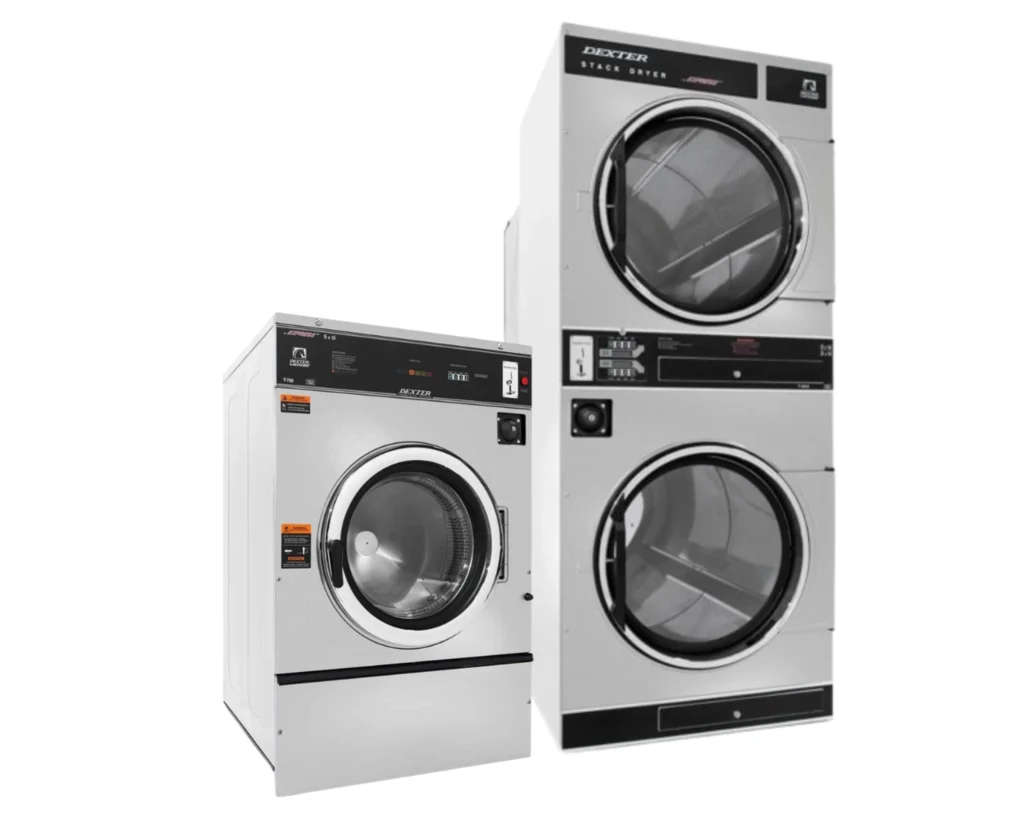
On-premise laundry equipment refers to washers, dryers, and related systems located directly within a facility rather than at an external laundry provider. In other words, laundry is processed on-site.
Many organizations prefer this approach because it gives them more control over turnaround time, hygiene standards, and daily operations.
Common industries that rely on in-house laundry equipment include hospitality, healthcare, residential communities, and institutional facilities. Each environment has different operational needs, but they all depend on reliable laundry systems to maintain consistent service.
Hotels and resorts process large volumes of sheets, towels, and guest linens every day, making fast turnaround times essential for housekeeping teams. Hospitals and healthcare facilities must handle linens according to strict hygiene standards, which requires dependable machines and controlled laundry workflows. Senior living communities also depend on on-site laundry systems to keep residents’ clothing and bedding clean and available.
In addition, athletic facilities and sports programs regularly wash uniforms and training gear, while correctional facilities and multi-housing communities use in-house laundry operations to manage high volumes of daily laundry efficiently.
Each of these environments produces a steady volume of laundry that must be processed consistently. As a result, selecting the right equipment becomes a critical operational decision.
For example, hospitality facilities often process large quantities of sheets and towels, while healthcare facilities handle linens that must follow CDC guidance for laundry and bedding. Therefore, equipment must match both volume and operational needs.
Facilities often work with experienced providers like Southeastern Laundry Equipment to evaluate their space, workflow, and daily laundry requirements before selecting machines.
Healthcare facilities rely on dependable on-premise laundry equipment to maintain strict hygiene standards and ensure clean linens are always available for patients and staff.

Planning an on-premise laundry setup for your facility?
Our team helps properties evaluate laundry volume, equipment capacity, and room layout so operations run efficiently from day one.
Request a Laundry Equipment ConsultationBefore choosing washers and dryers, it is important to understand how much laundry your facility processes each day.
Daily volume is usually measured in pounds of laundry per day. This estimate helps determine the number and size of machines needed.
For example, hotels typically generate between one and two pounds of laundry per guest room per day, depending on occupancy levels and linen usage, while healthcare facilities may produce significantly more depending on patient turnover.
The following table provides general estimates.
| Facility Type | Typical Laundry Volume | Example Daily Load |
|---|---|---|
| Hotel | 1–2 lbs per room | 100-room hotel = 100–200 lbs |
| Hospital | 10–15 lbs per bed | 50 beds = 500–750 lbs |
| Senior Living | 6–10 lbs per resident | 80 residents = 480–800 lbs |
| Athletic Facilities | Varies by team size | 150–300 lbs per day |
These estimates provide a starting point for selecting on-site laundry equipment capacity.
However, facilities should also consider peak periods. For instance, hotels may experience higher laundry volumes during busy seasons, while sports facilities may process more uniforms on game days.
Because of these fluctuations, planning for flexibility is essential.
Hotels generate a high volume of linens every day, which is why reliable commercial laundry systems play a key role in maintaining efficient housekeeping operations.

Not sure how much laundry equipment your property needs?
We can help estimate daily laundry volume and recommend washer and dryer capacity based on your building size, occupancy, and linen usage.
Get Equipment Capacity RecommendationsWhen planning OPL laundry systems, daily laundry volume is only part of the equation. Facilities must also evaluate how laundry moves through the space from start to finish. A well-designed workflow can reduce delays, improve staff productivity, and help equipment perform at its best.
Most successful OPL operations follow a simple but efficient process: collection, sorting, washing, drying, and folding. However, when machines are placed incorrectly or when the layout does not support this flow, staff may spend unnecessary time transporting loads between machines.
Because of this, facilities should think about workflow before selecting equipment capacity or quantities.
For example, placing washers near the entry point of a laundry room allows staff to unload dirty linens quickly. From there, dryers should be positioned nearby to minimize transport time. Folding tables and storage areas should then be located close to the dryers so that finished laundry can be processed efficiently.
Even small adjustments to layout can make a significant difference. When staff members do not need to move laundry across the room repeatedly, the entire operation becomes faster and more organized.
Additionally, facilities should consider peak laundry periods when designing workflow. A hotel may process large linen loads during morning housekeeping hours, while healthcare facilities often process laundry throughout the day.
Therefore, the goal of facility laundry equipment planning is not simply to install machines but to create a system that supports daily operations.
Working with experienced laundry equipment specialists can help facilities identify workflow improvements that might otherwise be overlooked.
Once daily laundry volume is known, the next step is selecting the right washer and dryer capacity.
Commercial laundry machines come in a wide range of sizes. Smaller machines may handle around 20 pounds per load, while larger machines can process more than 100 pounds.
However, the goal is not simply to choose the largest machines available. Instead, facilities should create a balanced lineup of washers and dryers that match their workflow.
Facilities processing frequent smaller loads may benefit from multiple mid-size machines. Meanwhile, facilities washing bulky linens or large batches may require higher-capacity equipment.
For example:
Selecting the right mix helps prevent bottlenecks and improves workflow.
Moreover, modern in-house laundry equipment often includes sensors and automated controls that optimize water usage and cycle times. As a result, facilities can improve efficiency without sacrificing cleaning performance.
In addition to machine capacity, facilities must evaluate physical space and utility connections.
Laundry rooms must accommodate several operational requirements, including water supply, drainage, electrical service, and ventilation.
Because of these factors, proper planning is essential before installing on-premise laundry equipment.
Most commercial washers require strong water pressure and reliable drainage systems. Meanwhile, dryers often require gas or high-capacity electrical connections.
Facilities should also plan for several important space and safety considerations, including:
Although these considerations may seem technical, they significantly affect daily operations. Therefore, working with experienced laundry professionals during planning can help avoid costly redesigns later.
Designing or upgrading a laundry room?
Proper layout, ventilation, and equipment placement can dramatically improve workflow and reduce operational downtime.
Schedule a Laundry Room AssessmentUnlike residential machines, on-site laundry equipment must operate continuously in demanding environments.
For example, hospital laundry machines may run multiple cycles every hour. Similarly, hotel laundry operations often run throughout the day to maintain linen availability.
Because of this workload, durability becomes a top priority.
Commercial laundry equipment is designed to withstand the demands of high-volume environments. Unlike residential machines, these systems are built with reinforced steel frames and heavy-duty internal components that support continuous operation throughout the day.
High-capacity motors allow washers and dryers to handle larger loads, while advanced vibration control helps stabilize machines during high-speed cycles. Many commercial models also include heavy-duty bearings and industrial-grade components that extend equipment lifespan and reduce the risk of unexpected breakdowns.
Even with these durable features, routine maintenance remains essential. Preventative servicing helps ensure that machines continue operating efficiently and reduces the likelihood of costly downtime.
Modern commercial laundry equipment now includes advanced technology that helps facilities operate more efficiently.
These features can improve cycle times, reduce energy consumption, and simplify maintenance monitoring.
Modern commercial laundry systems often include several features designed to improve efficiency and simplify daily operations. Some helpful features commonly found in these machines include:
Together, these technologies help laundry operations run more efficiently while reducing energy use, minimizing downtime, and improving overall equipment performance.
For instance, moisture sensors reduce unnecessary drying cycles. As a result, facilities save energy while protecting linens from excessive heat.
Energy and water usage are two important factors when selecting commercial laundry systems. Because commercial washers and dryers operate frequently throughout the day, even small efficiency improvements can lead to meaningful long-term savings.
Modern commercial washers often use advanced water management systems that automatically adjust water levels based on load size. As a result, facilities avoid unnecessary water consumption while still achieving effective cleaning results.
Similarly, many modern dryers include moisture sensors that detect when laundry is fully dry. Instead of running for a fixed amount of time, the dryer stops automatically once sensors detect that the load has reached the optimal dryness level. This feature helps prevent energy waste and reduces wear on linens.
Facilities also benefit from high-speed washer extraction. When washers spin at higher speeds, they remove more water from linens before the drying cycle begins. Consequently, dryers require less time and energy to finish each load.
These efficiency improvements can support both operational goals and sustainability initiatives. Many organizations are now focused on reducing water and energy consumption across their facilities, and laundry operations are often one of the largest areas for improvement.
According to the Environmental Protection Agency’s ENERGY STAR program, energy-efficient commercial laundry equipment can significantly reduce operating costs over time.
While efficiency features are valuable, they work best when machines are properly sized and maintained. Therefore, facilities should evaluate both equipment specifications and operational needs when designing their OPL laundry systems.
Even reliable equipment requires routine maintenance to perform at its best.
Routine maintenance is essential for keeping commercial laundry systems operating safely and efficiently. Regular inspections help identify small issues before they become expensive repairs and allow technicians to address potential problems before they disrupt daily operations.
For example, staff should regularly clean lint filters and inspect drainage systems to prevent airflow restrictions or clogs. Technicians also check belts, valves, and seals to ensure internal components remain in good condition. In addition, machine controls may need periodic calibration so wash and dry cycles continue operating as intended. Electrical and gas connections should also be inspected to confirm that machines are functioning safely.
Together, these routine maintenance steps help extend equipment lifespan while maintaining consistent laundry performance.
However, many facilities prefer working with experienced service providers who can monitor equipment and perform preventative maintenance.
Companies such as Southeastern Laundry Equipment support facilities by helping them maintain their laundry systems and reduce unexpected downtime.
Selecting washers and dryers involves more than reviewing product specifications. Facilities must evaluate workflow, utilities, maintenance plans, and long-term operational needs.
Because of this complexity, many organizations benefit from working with experienced commercial laundry providers.
Professional guidance helps facilities address several important planning considerations, including:
These steps help facilities design laundry operations that run smoothly while supporting long-term operational needs.
Another important consideration when selecting in-house laundry equipment is future growth. Facilities often experience changes in occupancy, service offerings, or operational demands over time.
For example, a hotel may expand its number of rooms, or a senior living community may add additional residents. When this happens, laundry volume naturally increases.
If laundry systems are designed only for current demand, facilities may quickly outgrow their equipment capacity. This can lead to longer processing times and increased wear on machines that must run continuously.
Because of this, many facilities design their laundry rooms with some flexibility for future expansion.
Facilities often plan for future expansion when designing their laundry rooms. This may include:
Considering these factors early allows organizations to scale their laundry operations later without major renovations or operational disruptions.
Additionally, technology continues to evolve within the commercial laundry industry. Modern equipment increasingly includes remote diagnostics, advanced cycle programming, and improved efficiency features.
Facilities that work with experienced laundry equipment providers can stay informed about these advancements and ensure their on-premise laundry equipment systems remain reliable as needs change.
Southeastern Laundry Equipment works with organizations throughout the region to support their on-site laundry equipment operations. Their team helps facilities design reliable laundry systems that match their daily needs.
By combining equipment expertise with service support, facilities can build laundry operations that remain dependable for years.
Selecting the right washers and dryers for an on-premise laundry facility requires careful planning. Capacity, workflow, durability, and energy efficiency all play an important role in building a reliable laundry operation that supports your staff and daily operations.
Facilities that evaluate these factors early can design laundry rooms that run more efficiently, reduce downtime, and support long-term operational needs. With the right combination of equipment and service support, organizations can maintain consistent laundry performance while adapting to future growth.
Ready to improve your on-premise laundry operation?
Southeastern Laundry Equipment helps hotels, healthcare facilities, and multi-housing properties design reliable laundry systems that support daily operations and long-term growth.
Start Planning Your Laundry Equipment SetupOn-premise laundry equipment refers to commercial washers, dryers, and supporting systems installed directly inside a facility so laundry can be processed on site. Hotels, healthcare facilities, senior living communities, and athletic facilities often rely on on-premise laundry equipment to keep linens, uniforms, and garments clean without sending laundry to an outside provider. By handling laundry internally, organizations gain better control over turnaround times, hygiene standards, and daily operations.
Many organizations prefer on-premise laundry equipment because it allows them to manage laundry schedules, sanitation standards, and operational efficiency more directly. When laundry is processed on site, staff can respond quickly to changing demand and avoid delays associated with external services. This approach is especially common in industries such as hospitality and healthcare where clean linens must be available at all times.
Choosing the correct capacity depends on how much laundry a facility processes each day. Hotels typically estimate one to two pounds of laundry per guest room per day, while healthcare facilities often process significantly more due to bedding, gowns, and towels. Evaluating daily volume, peak periods, and available space helps determine how many washers and dryers are needed and what machine sizes will support efficient operations.
Several industries rely heavily on on-premise laundry equipment because they generate a steady volume of laundry that must be processed quickly. Common examples include hotels, hospitals, senior living communities, sports facilities, correctional institutions, and multi-housing properties. In these environments, having reliable laundry systems on site helps maintain consistent service and operational efficiency.
Modern commercial laundry machines often include technology designed to improve efficiency and reduce operating costs. Helpful features may include automatic chemical dosing systems, moisture sensors in dryers, load balancing technology, and remote monitoring tools that allow staff to track machine performance. These features can help facilities reduce energy consumption, protect linens, and simplify maintenance monitoring.
Routine maintenance is essential for keeping on-premise laundry equipment operating safely and efficiently. Regular inspections help identify small issues before they turn into costly repairs, while preventative service helps machines maintain consistent performance. Cleaning lint filters, inspecting components, and scheduling periodic service checks can significantly extend the lifespan of commercial laundry equipment.
Working with experienced commercial laundry professionals can make it much easier to design an efficient laundry operation. Companies like Southeastern Laundry Equipment help facilities evaluate their laundry volume, available space, and operational needs before recommending equipment solutions. Professional guidance can also help improve workflow, ensure proper utility planning, and reduce the risk of downtime in high-demand laundry environments.