
Rather than reacting to breakdowns, keeping commercial laundry equipment running smoothly depends on consistency. As a result, for owners and managers, a clear laundry equipment maintenance checklist provides structure, reduces downtime, and helps protect one of the most heavily used assets in any on-premise laundry operation.
Whether you manage a hospitality property, healthcare facility, multi-family housing, or another commercial setting, maintenance routines play a direct role in reliability, safety, and long-term costs. The good news is that many tasks can be handled in-house with the right schedule, while others are best left to trained professionals.
This guide breaks down a practical laundry equipment maintenance checklist by daily, weekly, monthly, and annual tasks, helping you understand what to monitor regularly and when expert support becomes essential.
Commercial laundry machines operate under constant demand. As a result, washers and dryers run multiple cycles a day, often with different users, load sizes, and detergents. Without a structured maintenance plan in place, small issues can quietly build into costly failures over time.
For this reason, a consistent laundry equipment maintenance checklist helps owners and managers:
Instead of relying on memory or reacting to problems as they arise, a checklist turns maintenance into a predictable, manageable process.
Before diving into the checklist itself, it’s important to set expectations. Not every maintenance task requires a service call, but not every issue should be handled internally either.
In general:
A well-designed laundry equipment maintenance checklist makes that distinction clear, reducing risk while keeping operations efficient.
Visual Checks for Washers and Dryers
On a daily basis, visual checks form the foundation of any maintenance routine. Although these inspections take only minutes, they can help prevent larger issues from developing.
Typically, daily tasks include:
By catching changes early, potential damage can be addressed before it worsens over time.
Lint and Debris Removal
In many cases, lint buildup is one of the most common causes of dryer inefficiency and overheating.
As part of a daily laundry equipment maintenance checklist, operators should:
When airflow is properly maintained, dryers operate more efficiently, use less energy, and run more safely.
Cleaning External Surfaces and Controls
On a weekly basis, cleaning helps protect equipment finishes and ensures controls remain readable and responsive.
In practice, tasks may include:
At the same time, these steps help identify early signs of wear or damage.
Inspecting Hoses, Connections, and Vents
Likewise, weekly inspections should focus on components that experience regular movement or pressure.
With this in mind, key areas to review include:
As a result, these checks reduce the risk of water damage and ventilation problems.
Washer Drum and Seal Inspections
Over time, detergent residue and debris can affect washer performance.
For this reason, monthly tasks often include:
As a result, maintaining these components supports consistent wash results and helps reduce odors.
Dryer Vent and Exhaust Review
In addition to daily lint removal, monthly vent inspections take a closer look at airflow and connections.
Important steps typically include:
Otherwise, restricted airflow can shorten equipment life and increase energy consumption.
Evaluating Machine Performance Trends
Every few months, it’s helpful to step back and assess overall performance patterns.
In practice, owners and managers may review factors such as:
Taken together, these indicators often signal underlying issues that benefit from professional evaluation.
Reviewing Safety Features and Controls
At the same time, safety components should be checked periodically to ensure proper operation.
This process may involve:
Ultimately, maintaining safety systems protects both users and equipment.
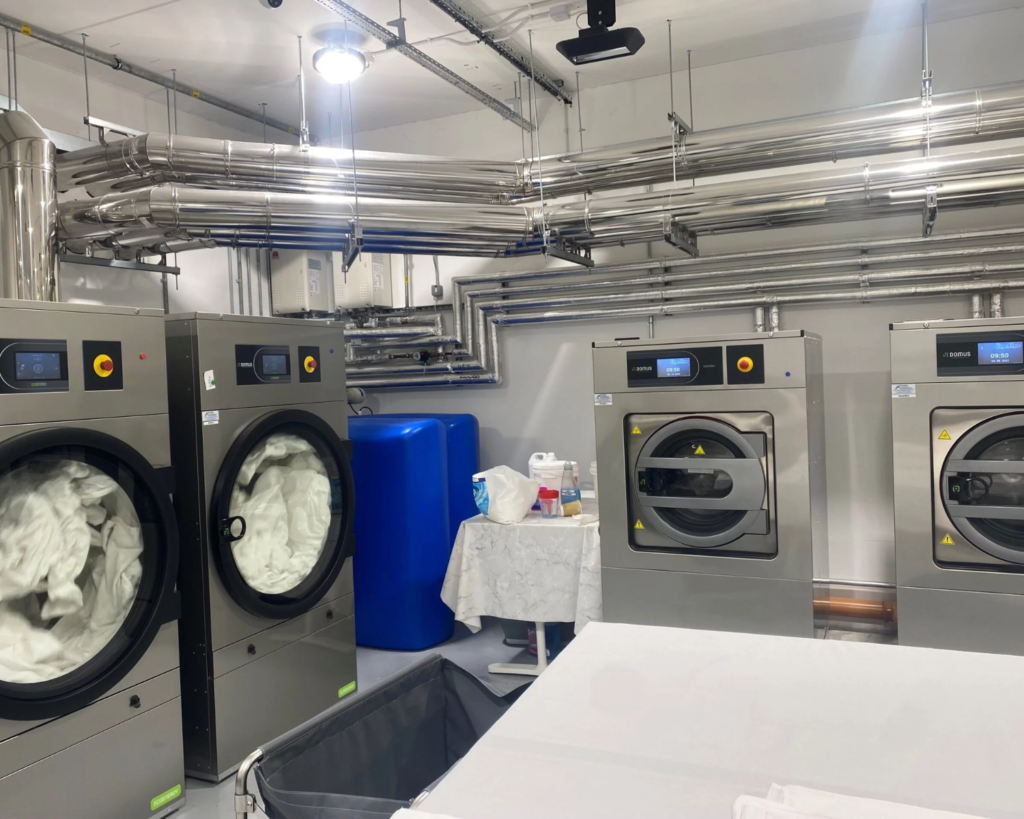
Professional Inspections and Servicing
Annual servicing is a critical part of a complete laundry equipment maintenance checklist.
Professional technicians can:
This proactive approach helps avoid major disruptions and supports long-term reliability.
Reviewing Maintenance Records and Planning Ahead
Annual reviews also provide an opportunity to look ahead.
Consider:
These insights help owners plan budgets, adjust maintenance schedules, and prepare for future needs.
| Maintenance Frequency | Key Focus Areas | Typical Responsibility |
|---|---|---|
| Daily | Visual checks, lint removal | On-site staff |
| Weekly | Surface cleaning, hose inspection | On-site staff |
| Monthly | Drum cleaning, vent review | On-site staff |
| Quarterly | Performance trends, safety checks | Management |
| Annual | Full inspections, diagnostics | Professional service |
This table highlights how responsibilities can be shared while keeping maintenance organized and predictable.
Even with a thorough laundry equipment maintenance checklist, some situations call for expert support.
Common signs include:
Attempting complex repairs without proper training can increase risk and lead to higher costs later.
Preventive care is not just about avoiding breakdowns. Instead, it plays a direct role in operational planning.
As a result, the benefits often include:
Over time, these advantages compound, which ultimately makes preventive maintenance one of the most cost-effective strategies available.
For many owners and managers, the challenge isn’t knowing what to do. It’s ensuring tasks are done consistently.
Successful operations often:
A structured laundry equipment maintenance checklist becomes part of daily operations rather than an afterthought.
As a result, on-premise laundry operations benefit from having a reliable service partner who understands commercial environments and long-term maintenance needs.
Southeastern Laundry supports owners and managers by helping maintain on-premise laundry equipment through planned service, preventive maintenance, and responsive support. Their service-oriented approach helps keep laundry rooms operating efficiently while minimizing unexpected disruptions.
A laundry room doesn’t have to be a constant source of maintenance headaches. Instead, with a practical laundry equipment maintenance checklist, owners and managers gain clarity, control, and confidence in their operations.
By combining consistent in-house routines with professional service when it matters most, commercial laundry equipment can deliver reliable performance year after year.
For those looking to strengthen their maintenance strategy, in turn, exploring service-focused on-premise laundry support can be a practical next step toward smoother, more predictable operations.
A laundry equipment maintenance checklist is a structured list of routine tasks used to monitor, clean, and inspect commercial washers and dryers. In practice, it helps owners and managers stay consistent with upkeep, rather than reacting to breakdowns after they occur. As a result, following a checklist can reduce downtime, control long-term costs, and extend equipment lifespan.
Generally, routine cleaning, visual inspections, and basic checks can be managed on site. However, mechanical adjustments, diagnostics, and internal repairs should be handled by trained technicians. For this reason, many operators use a checklist to clearly separate in-house responsibilities from tasks that require professional support.
By identifying small issues early, a laundry equipment maintenance checklist prevents minor wear from turning into major failures. Over time, this proactive approach reduces emergency repairs and keeps machines in service longer. In turn, fewer interruptions mean less frustration for users and more predictable operations for managers.
If machines show repeated error codes, unusual noises, inconsistent performance, or frequent shutdowns, it’s time to involve a professional. At that point, continuing in-house troubleshooting can increase risk rather than solve the problem. Instead, scheduled service helps restore performance and prevent further damage.
In this context, Southeastern Laundry works with owners and managers to support on-premise laundry operations through planned maintenance and professional service. As a result, their experience helps ensure a laundry equipment maintenance checklist is backed by expert support when advanced inspections or repairs are needed.