
A commercial laundry room should run with steady, predictable movement. When the sound level jumps, workers notice it right away. A loud laundry space is more than an annoyance. Noise signals strain on your equipment, disruptions in workflow, and problems that grow costlier the longer they are ignored. If you want to reduce commercial laundry noise, you first need to understand where that noise comes from and what each sound can tell you about the condition of your machines and your space.
This guide breaks down the major noise sources, explains what they mean, and gives you clear steps to diagnose and solve the issues before they hit safety, productivity, or equipment life span. It keeps the focus on on-premise laundry operations and the improvements that deliver quieter, more predictable performance in real facilities.
Throughout all of this, keep in mind that support matters. Reliable partners like Southeastern Laundry can help you keep your on-premise laundry environment running smoothly with expert guidance, setup advice, and ongoing support designed around the realities of commercial laundry rooms.
A loud laundry room feels chaotic. Workers communicate less effectively. Staff fatigue builds. Slight mistakes turn into workflow slowdowns. But the real problem is what noise represents.
Noise is energy escaping. When a washer shakes, when a dryer rattles, or when pipes hum, the machine is burning power in all the wrong places. That wasted energy creates wear. Worn parts mean less efficient cycles, higher utility use, and possible safety concerns. Noise is often your earliest warning sign.
If you want to reduce commercial laundry noise, you need accurate diagnostics, consistent upkeep, and smart improvements that boost performance without changing your core on-premise workflow.
Every laundry room has its own acoustic fingerprint, shaped by layout, equipment age, floor materials, utilities, and daily workload. Still, most noise issues fall into a few clear categories. Each one has a distinct sound, pattern, and cause.
With that in mind, below is an overview of the most common noise types and what each one usually signals.
This is the number one noise complaint in on-premise laundry environments. A shaking washer is loud, but it is also destructive. Vibration can travel through flooring, walls, plumbing lines, and exhaust systems. The sound it creates is more than surface-level. It is a structural disruption.
Common causes include:
Unbalanced loads. When weight collects on one side of the drum, the machine tries to correct it. Some washers manage this better than others, but no system is perfect. Repeated unbalanced loads wear out bearings and suspension systems.
Weak floors or platforms. If the surface under the machine flexes, even slightly, vibration multiplies. This is especially common in older buildings.
Loose bolts and anchors. Heavy equipment needs secure mounting. Over time, hardware loosens due to constant movement.
Suspension or shock absorber wear. Inside the washer are components built to manage movement. Once they wear down, even normal cycles feel rough.
Dryers tend to produce sharper, more metallic noise. They also create repetitive patterns that staff notice right away.
Frequent causes include:
Loose belts or worn rollers. These produce rhythmic tapping or scraping.
Lint buildup. When lint collects in the blower or airflow system, it disrupts the fan and creates whirring or rumbling sounds.
Damaged drum seals. Seals keep airflow controlled. When they wear down, the drum shifts slightly and generates noise.
Exhaust restrictions. Blocked or partially blocked ducting forces the blower to work harder, producing louder airflow noise.
Water is one of the primary drivers of noise in laundry environments. High water volume, fast shutoff valves, and long pipe runs all create points for sound to form.
Common causes include:
Water hammer. This sudden thump happens when valves close quickly. It is loud, disruptive, and damaging to plumbing.
Vibrating pipes. Pipes that are not firmly supported shake when water moves at high velocity.
Pressure irregularities. Too much water pressure forces lines to resonate when machines draw or release water.
You can reduce commercial laundry noise significantly just by fixing airflow systems. Laundry rooms run hot. They rely heavily on HVAC and exhaust to keep the environment safe and comfortable.
Typical noise sources include:
Blocked or undersized ducts. Airflow fights against restriction, which creates low-frequency rumbling.
Old fan motors. Worn bearings create shrill or grinding noises.
Unbalanced airflow. If inflow and outflow are not matched, pressure fluctuations create unnecessary noise.
Sometimes the machines are not the full problem. The room itself creates noise by amplifying what should be minor sounds.
This often comes from:
Hard surfaces. Tile, concrete, and metal reflect sound instead of absorbing it.
Open spaces. Big, square rooms create echo chambers.
Machine placement. Equipment set too close to walls or corners traps sound and forces it outward.
The table below gives you a simple way to spot problems and understand what each sound indicates. It also helps your staff diagnose issues early, which protects both the machines and your workflow.
| Noise Type | What It Sounds Like | Likely Causes | What It Usually Means |
|---|---|---|---|
| Heavy vibration | Thudding, shaking, floor movement | Unbalanced loads, weak floor, worn shocks, loose anchors | Washer stress, fast wear, possible structural damage |
| Rhythmic tapping | Regular tapping, scraping | Worn dryer rollers or belts | Drum movement out of sync, uneven wear |
| Rumbling or roaring | Deep airflow noise | Blocked dryer ducts, blower strain | Poor airflow, rising heat levels, reduced efficiency |
| Sharp metallic rattle | Loose or shifting metal | Dryers with loose panels, internal part wear | Early signs of component failure |
| Water hammer | Sudden bang in pipes | Fast-closing valves, pressure spikes | Plumbing stress, long-term damage risk |
| High-pitch whine | Motor strain | Old fan motors, worn bearings | Impending failure or reduced ventilation |
| Echo or amplified noise | Roomwide boominess | Hard surfaces, poor acoustics | Layout issues that multiply sound |
Noise matters because of what it slows down. Communication becomes harder. Workers strain their voices just to coordinate routine tasks. When staff cannot clearly hear equipment signals, alarms, or one another, they lose efficiency and face avoidable risks.
Beyond that, persistent noise creates stress. Consequently, stress leads to quicker fatigue, rushed work, and reduced attention to detail. Over time, those effects accumulate in a commercial laundry room. Ultimately, the goal is not silence. The goal is steady, predictable sound that signals healthy equipment and reliable cycles.
When you reduce commercial laundry noise, you improve communication, workflow, and overall facility safety.
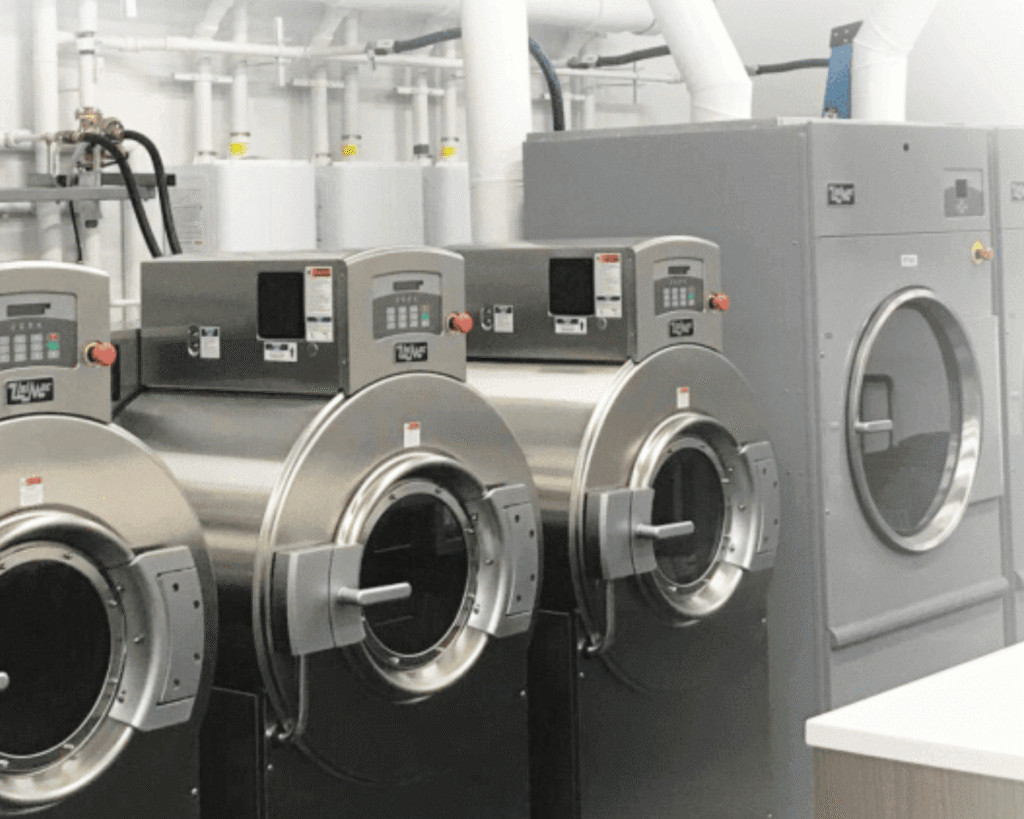
Diagnosing laundry noise does not require specialized tools. Instead, it only requires a consistent process. Unfortunately, most facilities skip this step, which is why noise problems drag on.
So, use this straightforward method:
Stand in the room and follow the sound. Is it coming from one machine or from a structural area like a wall or duct? Walk slowly and feel for vibration through the floor or walls.
Is the noise continuous, rhythmic, sudden, or changing throughout the cycle? For example, rhythmic noise usually connects to rotation. Meanwhile, sudden noise relates to valves. Additionally, continuous noise often points to airflow or structural amplification.
If one washer is quiet and the one next to it shakes, the problem is isolated. If every washer vibrates, the floor, anchors, or plumbing may be the underlying cause.
A washer that only shakes during the final spin likely has a balance or suspension issue. A dryer that rattles only during high heat likely has airflow problems.
Heavier loads, longer shifts, or new staff handling equipment can change noise patterns almost overnight.
Noise issues are easier to solve when you track what you hear and when you hear it. A simple log helps you identify trends.
Additionally, partners like Southeastern Laundry support ongoing diagnostics with guidance, service insight, and performance checks that keep on-premise laundry teams ahead of developing problems.
You can reduce commercial laundry noise with a mix of quick adjustments, smarter layouts, and routine maintenance. None of these take your laundry room offline, and most improve equipment life span at the same time.
Train staff to load washers evenly. Overweight cycles should be split into smaller loads when possible. Even loads protect bearings, shocks, and anchors.
Use proper leveling tools and ensure all anchors are tight. A machine that sits even slightly off level will shake more during high-speed spin cycles.
Quality vibration pads absorb movement before it reaches the floor. This reduces noise for both the room and any nearby spaces.
If your facility uses an older concrete slab or a second-floor laundry room, consider reinforcements. Even a small amount of structural flex multiplies vibration.
Clear lint traps, internal ducts, and external vent lines. Restricted airflow forces the blower to work harder, making everything louder.
Do this on a schedule. These parts wear out slowly, so noise often shows up long before failure. Replacing them early keeps cycles quiet and smooth.
Water hammer is both loud and easy to solve. Pressure adjustments or shock arrestors quiet plumbing instantly.
Balanced airflow reduces rumbling, whistling, and temperature spikes. It protects staff comfort and lowers noise levels.
Soft surfaces absorb sound. Likewise, acoustic panels, rubber flooring sections, and strategic placement go a long way. Even so, small changes can transform how noise behaves in the room.
Regular checks are the fastest way to keep noise from ever becoming a problem. Additionally, on-premise laundry teams benefit from ongoing support through partners like Southeastern Laundry, who help facilities set schedules, monitor performance, and stay ahead of wear.
On-premise laundry gives you control over quality, speed, and the type of care your linens receive. In addition, a quiet laundry room strengthens that control. You get:
When you reduce commercial laundry noise, you are not just improving comfort. You are strengthening your entire operation.
Noise problems do not fix themselves. Instead, they grow. As a result, the right guidance makes all the difference. This is why experienced industry partners come in.
Southeastern Laundry helps facilities create efficient on-premise laundry environments that run quietly, consistently, and safely. Moreover, their approach focuses on what matters: proper setup, smart diagnostics, practical adjustments, and ongoing support that fits real-world workflow. In the end, they help teams get more out of their equipment without pushing unnecessary upgrades or outsourcing.
A loud commercial laundry room is trying to get your attention. Every noise signals something about your equipment, your layout, or your workflow. Once you understand what those sounds mean, you can act early and protect both your machines and your team.
If your goal is to reduce commercial laundry noise, start with good diagnostics, smart adjustments, and a predictable maintenance routine. Pair that with expert guidance from partners like Southeastern Laundry, and you build a quieter, safer, more productive laundry environment that supports your operation for the long run.
Most noise comes from vibration during washer extraction, airflow restrictions in dryers, unbalanced loads, and hard surfaces that amplify sound. Plumbing and HVAC systems can add to the problem when pressure or airflow is uneven.
Sudden changes are the biggest warning signs. New rattling, stronger vibration, longer rumbling during airflow, or sharp bangs in plumbing usually point to wear or structural strain. Early checks help prevent larger failures.
Yes. Moving equipment away from corners, adding soft surfaces, or spacing washers and dryers more evenly can reduce reflection, echo, and vibration transfer. Small shifts often make the room feel more stable and controlled.
If the floor flexes during extraction, reinforcement helps. Stronger flooring reduces movement that spreads noise through walls and foundations. It also protects your equipment from long-term stress.
A cluttered room amplifies sound. Ready-to-use modular storage from companies like STORsquare can help organize supplies, open up floor flow, and prevent items from rattling during cycles. Keeping the room tidy improves acoustics and makes it easier to reduce commercial laundry noise.