
In multi-housing properties, laundry rooms are high-traffic, high-consumption spaces. Every spin cycle and drying load eats into your operating budget—and often, more than it should. If you’re looking to upgrade laundry room efficiency without sacrificing performance, modern energy-saving equipment offers more than buzzwords. It delivers measurable results.
From reducing water use by 35% to slashing energy costs by 25%, smart upgrades can transform a laundry room from a cost center into a controllable asset. But not all “green” tech delivers the same results in real-world settings. Let’s look at the upgrades that actually move the needle—and how to know if they’re right for your property.
For multi-housing operators, sustainability isn’t just a branding play—it’s a budget strategy. High-efficiency laundry systems reduce resource consumption, extend equipment life, and help control rising utility costs. In shared laundry environments, where volume is high and downtime is disruptive, efficient machines also ease the strain on infrastructure.
Today’s renters expect responsible energy use from the places they live. High-efficiency laundry rooms support multi-housing laundry sustainability while improving daily operations and resident satisfaction.
Here are three proven upgrades that consistently lower laundry utility bills in apartment, condo, and student housing laundry rooms:
1. Heat Pump Dryers
These dryers use a closed-loop system that recycles warm air, significantly reducing energy use—often by 40% or more compared to conventional dryers. They also operate at lower temperatures, which protects fabrics and reduces maintenance issues like clogged vents or burnt-out elements.
2. High-Extract Washers
High-speed extract cycles remove more water before drying, reducing dry time by up to 25–30%. That’s less energy per load and less wear on dryers. Bonus: residents spend less time waiting on machines, which improves user satisfaction.
3. Water-Reuse and Drain-Water Heat Recovery Systems
Systems that reclaim water from rinse cycles or recover heat from wastewater can dramatically reduce both consumption and utility bills. These are especially impactful in high-volume operations.
When implemented correctly, these laundry energy efficiency upgrades pay for themselves—often faster than expected.
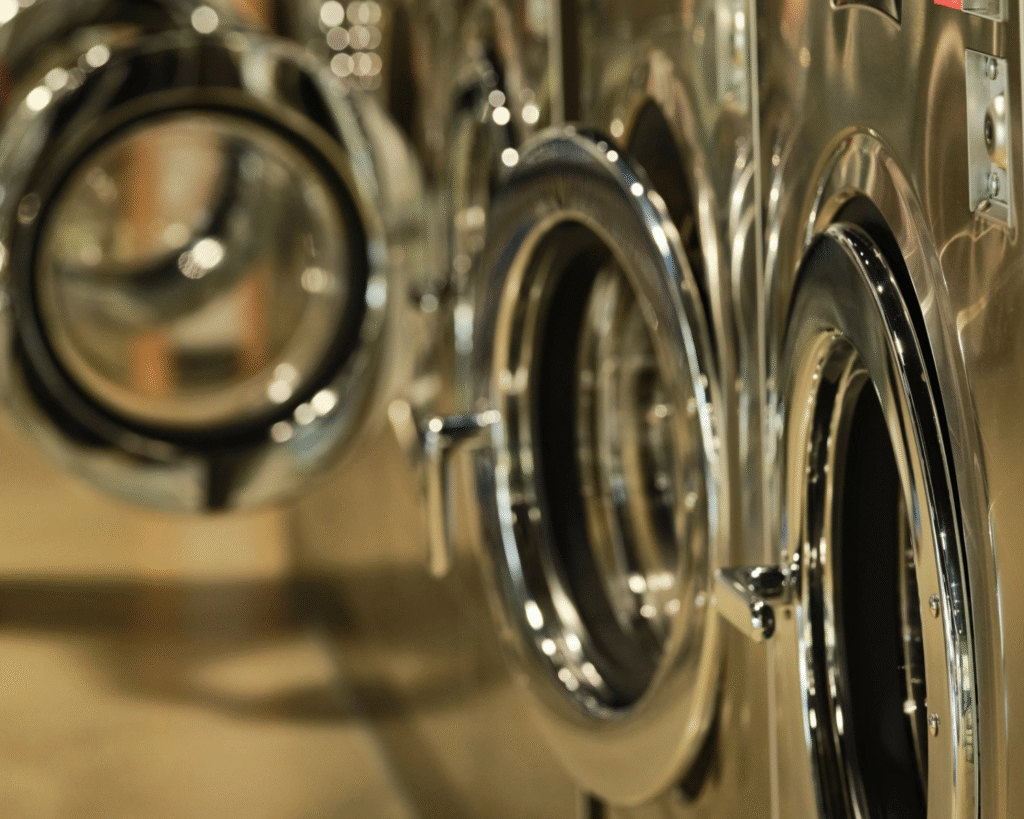
Every upgrade comes with a cost, but the return is rarely theoretical. In actual multi-housing applications:
Partnering with a service-focused provider like Southeastern Laundry ensures that every piece of equipment performs the way it’s supposed to—not just on day one, but long after installation.
| Upgrade | Expected Savings | Additional Benefits | Estimated Payback | Good For |
| Heat Pump Dryers | Up to 40% energy savings | Lower temps, reduced venting, longer fabric life | 2–4 years | Apartments & Student Housing |
| High-Extract Washers | 25–30% shorter dry cycles | Faster turnover, less strain on dryers | 2–3 years | High-volume laundry rooms |
| Water-Reuse Systems | Up to 35% less water usage | Cuts water/sewer bills, supports green initiatives | 3–5 years | Eco-conscious properties |
| Drain-Water Heat Recovery | 10–15% energy recapture | Captures heat from wastewater, lowers heating demand | 3–4 years | Large multi-unit buildings |
| Routine Calibration | Up to 15% more efficiency | Maintains optimal settings, prevents energy waste | Ongoing (low cost) | All laundry room types |
Even the most efficient machines lose their edge without regular maintenance. Incorrect water levels, out-of-spec temperature sensors, or worn belts can quietly drive up usage costs.
In addition, routine calibration ensures that washers use only as much water and detergent as needed, while dryers heat just enough to get the job done. Ultimately, these small adjustments protect your investment and help reduce utility cost in the laundry room year-round.
Before making changes, use this quick audit to see if your laundry room is ready for an upgrade:
If you answered “yes” to even two of these, it’s time to explore a real-world solution to upgrade laundry room efficiency.
Energy-efficient laundry technology isn’t just about eco-labels—it’s about real operational wins. In multi-housing properties, the right upgrades can cut costs, reduce service calls, and elevate the resident experience.
But results don’t come from equipment alone. They come from experience, calibration, and support.
At Southeastern Laundry we help property managers plan, implement, and maintain high-performance laundry rooms that actually deliver on efficiency goals—without the fluff.
Ready to upgrade laundry room efficiency in your building? We’re here when you are.
The most impactful upgrades include high-extract washers, heat pump dryers, and water-reuse or heat recovery systems. These reduce energy and water use while improving machine performance—especially in high-volume multi-housing laundry rooms.
Depending on your current setup, you could see utility savings of 15–35%. In many cases, efficient washers and dryers pay for themselves in 2–4 years, with added savings from fewer service calls and extended equipment life.
Yes—older machines often consume more water, electricity, and gas, even if they seem functional. Upgrading to modern, calibrated equipment helps reduce operating costs, improve performance, and provide a better experience for residents.
Regular calibration ensures washers and dryers operate within optimal settings. That means no wasted water, no overheating, and fewer breakdowns—all of which help upgrade laundry room efficiency over time.
Not necessarily. Many properties see results by upgrading key components or phasing in high-efficiency units. A service partner like Southeastern Laundry can help you build a plan that balances cost, ROI, and operational goals.